Grocery Glow-up Digital Guide (Freebie)
Free Digital Guide for EWG's 2025 'Dirty Dozen' and 'Clean Fifteen' Produce

Need to prioritize what organic produce to purchase? Enter your details above for a digital shopping guide featuring the EWG's 'Dirty Dozen' and 'Clean Fifteen' produce lists to help you with your next grocery haul!
Below, you'll find additional information about the 'Dirty Dozen' and 'Clean Fifteen' rankings and how you can save this digital guide as a location-based reminder for your next grocery store visit. When you arrive at your grocery story to start shopping for those beautiful fruits and veggies, it will appear as a reminder on your phone!
Jump to:
- 📱 2025 Grocery Glow-up Digital Guide
- 📍 instructions to save this freebie as a location-based reminder
- 📝 key points for the 2025 list
- 🌱 who is the environmental working group?
- ✅ testing methods
- 🍌 samples with parts not tested
- 🏡 recommendations for preparation at home
- 📈 surprising insights
- ❓ frequently asked questions
- 🧐 additional considerations
- 🛑 dirty dozen list 2025
- 💚 clean fifteen list 2025
- 🥣 recipe recommendations from 'Clean Fifteen'
- 🕰️ the latest...
📍 instructions to save this freebie as a location-based reminder


Use the above form to sign up and receive the PDF via email. You can save the PDF to use manually or as a printable. If you'd like a location-based reminder, however, you simply need to copy the link for the PDF and proceed with the following steps.
Open the Reminders app on your phone. Select "New Reminder" in the bottom left corner.
Add a name of your choosing. Then, add the PDF link in the Notes section just below the name.
Select the location-based icon and choose "Custom" to enter a custom loction. Enter the address for your preferred grocery store or search the name and choose from the results.
📝 key points for the 2025 list
Incorporating fruits and vegetables into our diet is incredibly important. But, (if you're like most of us) it's a challenge to afford organic-only produce even if organic options lower your exposure to synthetic pesticides. The Environmental Working Group (EWG) reviews data from USDA testing to compile an annual list outlining what fruits and veggies contain the most - and least - amount of pesticides.
Data from USDA research on specific crops is released two years after samples are collected. This means that EWG analyzed new data for produce collected in 2023 and the results are factored into the 2025 report. Included in this produce were 'apples, avocados, blackberries, celery, grapes, mushrooms, onions, plums, potatoes, sweet corn, tomatillos, tomatoes and watermelon.'
Close to 60% of the conventionally-grown produce on the 'Clean Fifteen' were found to have no detectable pesticide residues. Remember, conventionally-grown means non-organic. So, there may be less risk of pesticide exposure if you opt for non-organic varieties from the 'Clean Fifteen' group.
Over 95% of non-organic produce on the 'Dirty Dozen' list contained residues of pesticides that could be harmful to health. This includes potatoes, where close to 90% of conventionally-grown potatoes contained chlorpropham...a pesticide banned in the EU starting in 2019.
🌱 who is the environmental working group?
To provide some additional context, the EWG (Environmental Working Group) is an "independent nonprofit organization largely funded by individual donations and grants from charitable foundations." Simply put, the EWG is a nonprofit that conducts research and analyzes data to release guidance for consumers interested in supporting a healthy environment and lifestyle.
Below are their specific focus areas:
- Food & Water
- Farming & Agriculture
- Personal Care Products
- Household & Consumer Products
- Energy
- Family Health
- Toxic Chemicals
- Regional Issues
On their site, you can find consumer guides for everything from cosmetics to tap water, and sunscreen to dietary recommendations for reducing climate impact. There's quite a bit to explore, including the pesticide produce guide we're discussing in this post.
✅ testing methods

EWG is transparent about their testing methodology, and I'm including a breakdown of the process below, specific to 2025.
Samples from different time periods. Data for the 2025 guide is fueled by over 53,000 samples of 47 fruits and vegetables. When sampling non-organic produce, the EWG reviewed data from the most recent sampling periods (typically 1-2 years).
Sample preparation (conducted by the USDA). The samples are prepared in a way that most closely resembles what we would do at home...washing produce under water for 15-20 seconds. Side note: How long do YOU typically wash your produce? When counting, you quickly realize how much longer 15-20 seconds is compared to what it sounds like.
- Peels: Edible peels are rinsed and drained before testing, while inedible peels are simply peeled. If the ends are inedible, they are cut off before the produce is blended.
- 🚨 NOTE: The EWG notes that bananas are considered inedible peels. However, there is growing popularity with banana peel recipes, so it's important to note their testing process excludes this part of the fruit.
- Creating the samples: Produce is chopped or blended until a "homogenous mixture is attained."
Ranking. The EWG reviews the percent of produce with at least one pesticide detected, the average number of pesticides detected on a single sample, average total concentration of pesticides detected on a single sample, and overall pesticide toxicity. The raw data was standardized and ranked.
Toxicity determination. A pesticide-toxicity ratio is determined by examining the pesticide concentration and dividing the average values by a toxicity reference value for the parent pesticide.
- The NOAEL is used for toxicological reference value and stands for no-observed-adverse-effect-level. Which means it represents the threshold where adverse effects were detected in animal studies.
🍌 samples with parts not tested
If you repurpose parts of your produce not commonly eaten, please note the USDA may have removed that part of the produce after washing and prior to testing. For example, if you enjoy strawberry top simple syrup like I do, note that strawberry tops are excluded from testing.
- Avocados
- Bananas
- Broccoli
- *stems longer than 3 inches removed, or stems considered inedible
- Cantaloupe
- *seeds and rind removed
- Honeydew Melons
- *seeds and rind removed
- Mushrooms
- *woody ends removed
- Onions, Bulb
- *onion top, outer layer, first white layer, membrane, root portion
- Onions, Green
- *wilted tops, roots removed
- Oranges/Tangerines/Grapefruit
- Papaya
- Peaches
- *pits removed
- Peas, Green
- *shelled and pods discarded
- Peppers, Bell Sweet
- *stem, core, and seeds removed
- Pineapples
- *top, core, shell removed
- Plums
- *pits removed
- Squash (Summer and Winter)
- *stems and ends removed
- Strawberries
- *stems and leaves removed
- Tomatillos
- *husks removed
- Watermelon
- *rind removed
Review specific preparation details in their entirety via the USDA's Pesticide Data Program PDF.
🏡 recommendations for preparation at home

Washing and peeling. Washing fruits and vegetables, as well as peeling appropriate foods is helpful to reducing pesticide residue. For those foods with pesticides, it likely won't remove them entirely, but is a helpful step to lessening their presence. When washing, aim to run the fruits and veggies under running water for at least 15 seconds.
Fruit and vegetable washes. According to the EWG, the effectiveness and potential toxicity of fruit and vegetable washes has not been evaluated, meaning there is no current recommendation to use these chemical washes. This is also the recommendation of the FDA.
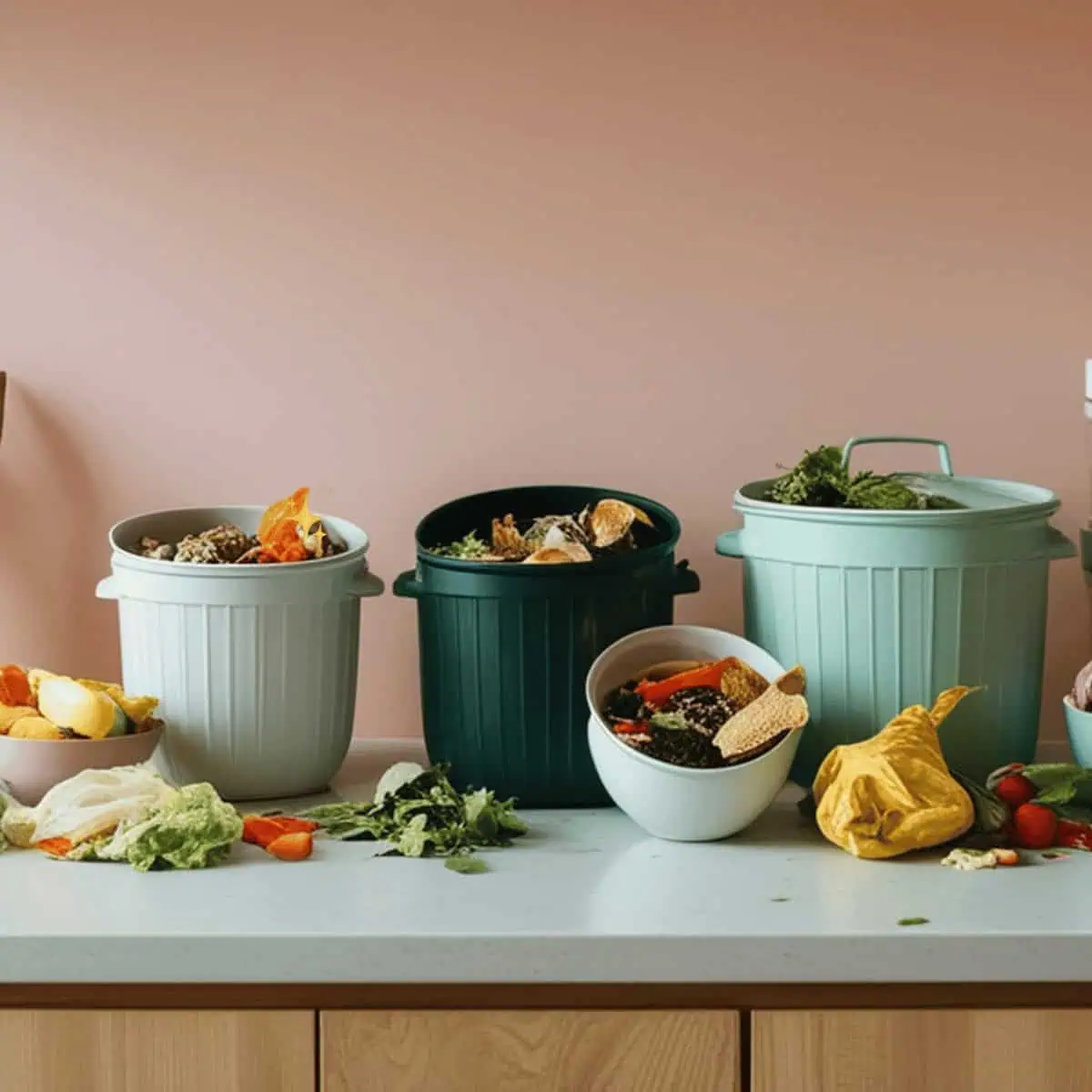
Low-Waste Cooking
Interested to get the most out of your ingredients and recipes? Check out our complete guide to low-waste cooking for more tips and tricks to reduce waste without sacrificing quality and flavor!
📈 surprising insights
Determining toxicity of pesticides. While the EWG does pull information from the EPA and follows methodology to provide direction regarding toxicity, I found it interesting that "no easily accessible, comprehensive database of toxicological reference values for pesticides exist." As someone who cares about pesticide exposure, this is a red flag for me. 🚩
Presence of 'neonics.' Let me be clear...I'm not suggesting the presence of one type of pesticide over another is better or worse. As an environmental advocate, though, 'neonics' (short for neonicitinoids) is an alarming insecticide wreaking havoc on ecosystems by harming 'pollinators, benefitical insects, and aquatic invertebrates.' (Learn more from the Xerces Society here.) When shopping for plants to add to my landscape, I research the supplier to ensure their plants are treated with neonics before arriving at the nursery. If I go to those lengths for my property, I'd also love to avoid putting them in my mouth.
Despite washing and peeling produce prior to testing, traces of 265 pesticides were found on produce. 203 of these were on the fruits and vegetables that landed on the 'Dirty Dozen' list.
Studies examining health impacts from pesticide exposure focus on one pesticide at a time. The fact that we typically consume various combinations of pesticides at any given time is cause for concern, especially due to animal studies indicating increased toxicity when combined.
❓ frequently asked questions
What fruit should you buy organic?
Deciding whether or not to purchase organic fruit is a personal decision, but according to the latest 'Dirty Dozen' list from the EWG, our recommendation is to prioritize the following fruits:
- Strawberries
- Grapes
- Peaches
- Cherries
- Nectarines
- Pears
- Apples
- Blackberries
- Blueberries
Is it worth buying organic berries?
Making the choice to purchase organic berries is personal and requires consideration of availability and budget. If you're interested in buying organic produce to limit pesticide exposure, it is worth strongly considering organic berries. As outlined by the EWG in their most recent (2025) 'Dirty Dozen' report (and many years prior), berries grown conventionally contained pesticide residue on over 96% of samples.
What are the three guidelines for buying fresh fruit?
Select the best fresh fruit by following some simple guidelines, including understanding and choosing what's in season and at peak freshness, aim for a vibrant color with no blemishes (or only those that are superficial), and fruit that is firm and only gives slightly when pressed. These tips will help you pick the best fruit. Don't shy away from some scratches or 'blemishes' on produce as long as they appear to be superficial and don't create a large soft spot. Now, the trick is to make sure you eat it when you get home, and we have plenty of recipes to help you do just that!
🧐 additional considerations

Local sourcing and farmer's markets. Just because something lacks an organic certification doesn't mean the grower used harmful pesticides. They may be going through the lengthy (and expensive) organic certification process, or simply don't rely on synthetic pesticides. If you're able to speak to the farmer about their produce, that can open new doors for you without purchasing organic. Bottom line? If you're willing to engage with the supplier, you may find more suitable options than you originally thought available.
GMOs. This list does not directly address GMOs. EWG makes the point that the majority of GMOs are associated with corn and soybean crops used in processed foods...and that they're less commonly found in everyday fruits and vegetables. However, some items can be genetically modified and the group states, "Consumers who want to avoid GMOs can choose organic zucchini, yellow squash, sweet corn, papaya, apples and potatoes." Learn more in their FAQ section.
Importance of fruits and vegetables to our diets. Eating fruits and vegetables is a critical component of a vegan diet, and it should be for ALL diets. Even the EWG points out that eating fruits and vegetables is more important than avoiding them due to pesticide concerns. For those who want to minimize pesticide exposure, though, the list can help with how to prioritize making organic selections.
🛑 dirty dozen list 2025
- Spinach
- Strawberries
- Kale, Collard, Mustard Green
- Grape
- Peaches
- Cherries
- Nectarines
- Pears
- Apples
- Blackberries
- Blueberries
- Potatoes
💚 clean fifteen list 2025
- Pineapples
- Sweet corn, fresh and frozen
- Avocados
- Papaya
- Onion
- Sweet Peas (frozen)
- Asparagus
- Cabbage
- Watermelon
- Cauliflower
- Bananas
- Mangoes
- Carrots
- Mushrooms
- Kiwi
🥣 recipe recommendations from 'Clean Fifteen'
Here are some recipe recommendations that feature ingredients from the 'Clean Fifteen' list:
- Buffalo Cauliflower Bites
- Air Fryer Bananas
- Banana Tahini Cookies
- Roasted Carrots and Vegan Whipped Feta
Learn more about the information featured in this post at the Environmental Working Group's website. You'll find the statistics included in this guide and so much more!