
Sabai Essential Sofa Review (Unsponsored)
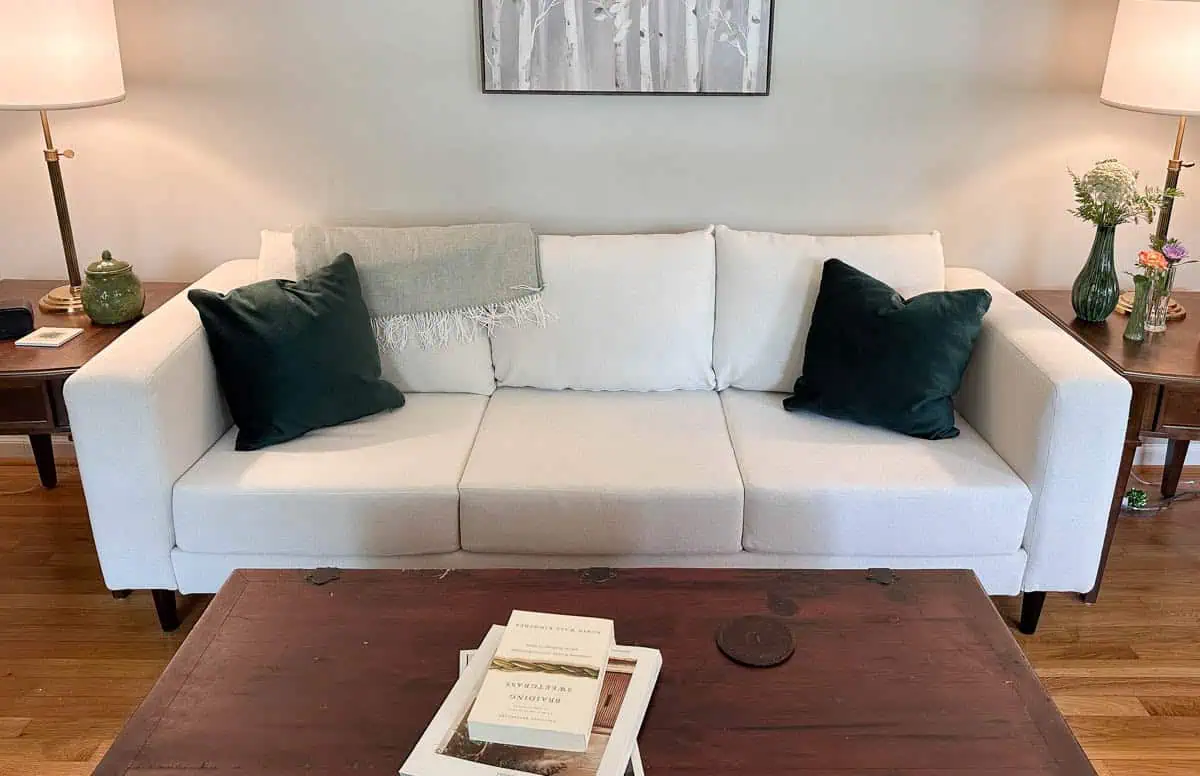
We've used our eco-friendly Sabai Essential Sofa in our living room for over a year now, and want to share our review of its performance thus far. If you're searching for a sustainable couch, our goal is to help you determine if Sabai is the right fit for you!
Would you like to save this?
Disclosure: Some links below are affiliate links. That means that, at zero cost to you, I will earn an affiliate commission if you click through the link and finalize a purchase. As an Amazon Associate, I earn from qualifying purchases. This is an unsponsored review.
Jump to:
This review is for the Essential Sofa in Upcycled Poly fabric with velvet accent pillows.
While I would love to wave a magic wand and throw unlimited funds at changing all of our furniture to sustainable materials, the reality (for us) is that we need to make adjustments in stages. As we start to transition our furniture, though, we do look for items that are quality, as budget-friendly as possible, and are more gentle on the environment.
Late 2023, we started the search for a living room couch and knew that we were going to purchase a new piece of furniture (as opposed to buying used). I spent months researching options that would be healthy to have in our home, and less of an impact on the environment. We landed on the Sabai Essential Sofa and officially welcomed it into our home in early 2024. Now that we've had it for over a year, it's time to give you the full review!
📝 our sofa checklist

Sustainable materials. Boy, did I go down a rabbit hole with researching materials that would be "safe" to have in the home. From off-gassing and VOCs, to organic fabrics, there's a TON to learn about the subject. Our range of acceptability started with a GREENGAURD GOLD certification at a minimum to completely organic fabric and frame materials (wood, etc.) that are sourced responsibly.
Length to accommodate a moderately-sized living room as well as two tall people. We're two relatively tall people - I'm 5 feet 10 inches and Cliff is 6 feet even. We needed furniture that could support our larger frames comfortably, both sitting upright and stretched out. Additionally, we wanted three seats across, so people can sit side-by-side without straddling a break in the cushion.
Removable back cushions. Over time, cushions can lose their shape and need to be "fluffed" or rotated to continue providing support. It seems like a simple concept, but SO many pieces of furniture on the market sew cushions to the back of the sofas. That was a deal breaker for this gal - I want to be able to turn, rotate, and manipulate the cushions over the span of the sofa's life.
No leather. As vegans, we avoid materials sourced from animals whenever possible. Leather was completely out of the question, unless it was vegan leather.
Fabric to withstand cat claws and moderate use. Lucy and Lando, our sweet rescue cats, are still young and learning where to channel their clawing energy. We learned tighter-woven material can withstand claws a little better (makes sense), so we added that to our list during the research process.
Quality without breaking the bank. Our goal was to keep the purchase under $2000 US dollars, and closer to $1000, if possible. Quality and longevity is important to us, so we were willing to spend a little more for something that will last.
Classic and simple design. I am much more comfortable with timeless pieces that can blend into any aesthetic. Rather than selecting a bold color or structure for the sofa, I would rather it be a neutral foundation that can support pops of color and design with pillows, art, etc.
🏷️ brands we considered
Several of the below list are larger companies that have physical locations in our area. I was a little concerned about ordering from an online-only brand without the opportunity to try it in store, so I decided to try and see if we could customize something from a larger retailer to meet our sustainability needs.
Pottery Barn. They had a few basic options, but the couch we considered didn't feel very supportive.
Haverty's. The couch that would come the closest to working for us looked too similar to what we have in our "den" or living area. It's fabric was also polyester and we weren't able to find many options for a customizable sustainable option.
Bassett. We purchased from Bassett a few years earlier for a few chairs in our kitchen and had a good experience. However, when I reached out to their chat support to inquire about sustainable fabric options, they were rude and essentially disconnected the chat.
West Elm. We just didn't quite see a good fit for us, when comparing against our checklist. The prices were higher and nothing felt like it would work. I do give West Elm credit for supporting more eco-friendly practices than many furniture retailers - learn more at the Green Living Mag's West Elm: Caring for the Planet post.
Ethan Allen. Our options would have exceeded the budget we set for ourselves; though, they are a little more transparent about environmental efforts like sustainable wood sourcing.
Room and Board. Similar to some of the other brands, we decided Room & Board was just a little too far outside our budget. I do appreciate their sustainability efforts, though, which are outlined here.
IKEA. The couches we tried just didn't feel quite substantial enough for the longevity we were seeking. I think IKEA has viable options, but we decided we wanted something a little more formal in our living room.
Sabai. Our ultimate choice, which took us several weeks to make a final decision.
✅ why we purchased the sabai essential sofa
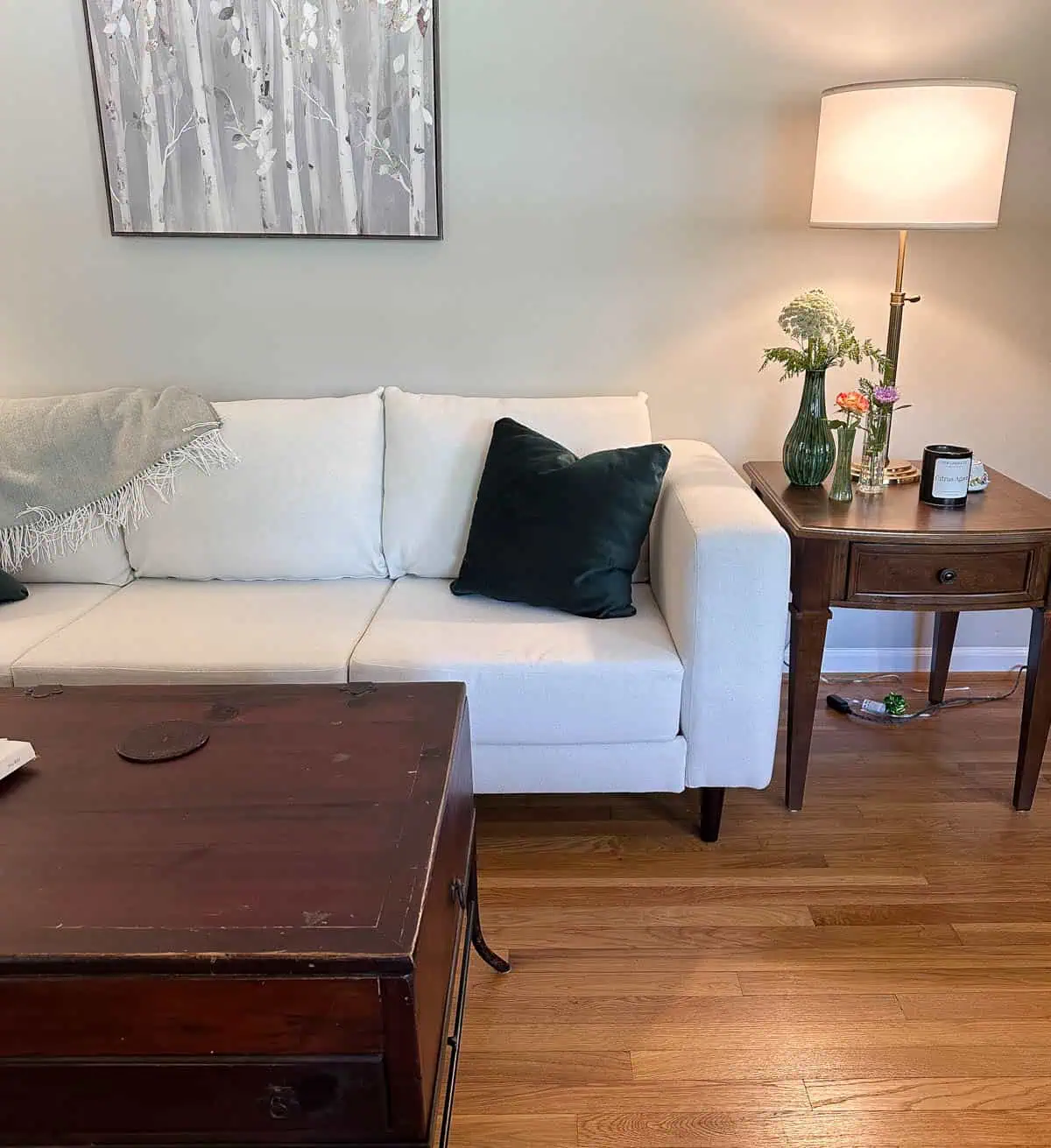
I stumbled upon Sabai during a Google search and loved the company's position on sustainability. With the Essential sofa, I decided to break a little from the traditional design we've selected in the past (rounded arms, etc.). This sofa has a little mid-century feel while maintaining a classic look. The best part? The design met our checklist. My only hesitation was missing the opportunity to try it in person, but the couch had enough positive reviews, we decided to take the leap.
What exactly about the Sabai model did we love? Here's a simplified breakdown:
- Repair Don't Replace program.
- FSC-certified materials and CertiPUR-US high resiliency foam that exclude flame retardants and formaldehydes.
- We selected the Upcycled Poly material, which is also GreenGuard Gold Certified.
- The materials used are selected to intentionally minimize any off-gassing.
- Packaging.
- Wooden legs use a non-toxic water-based finish.
- Supporting a Certified B-Corp.
- Manufactured in the United States.
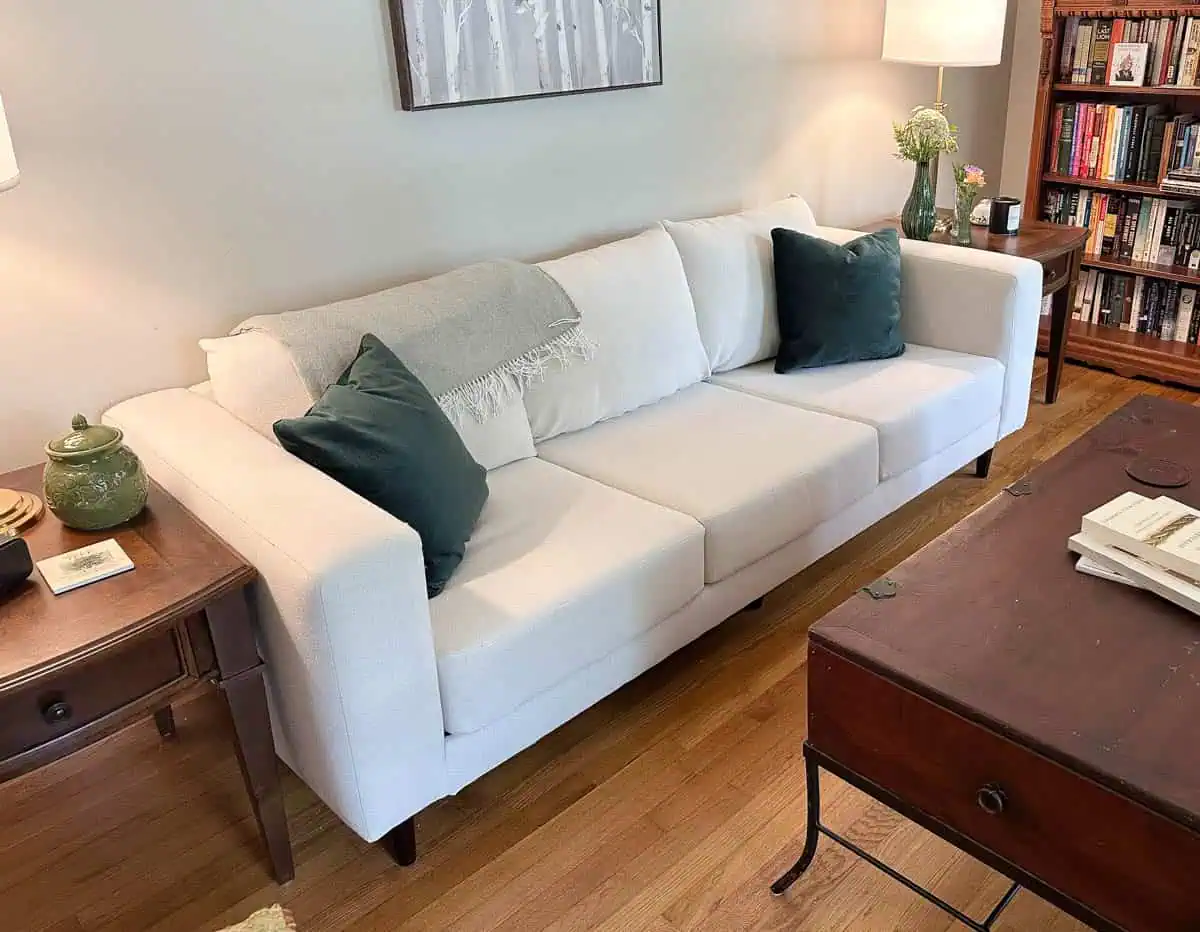
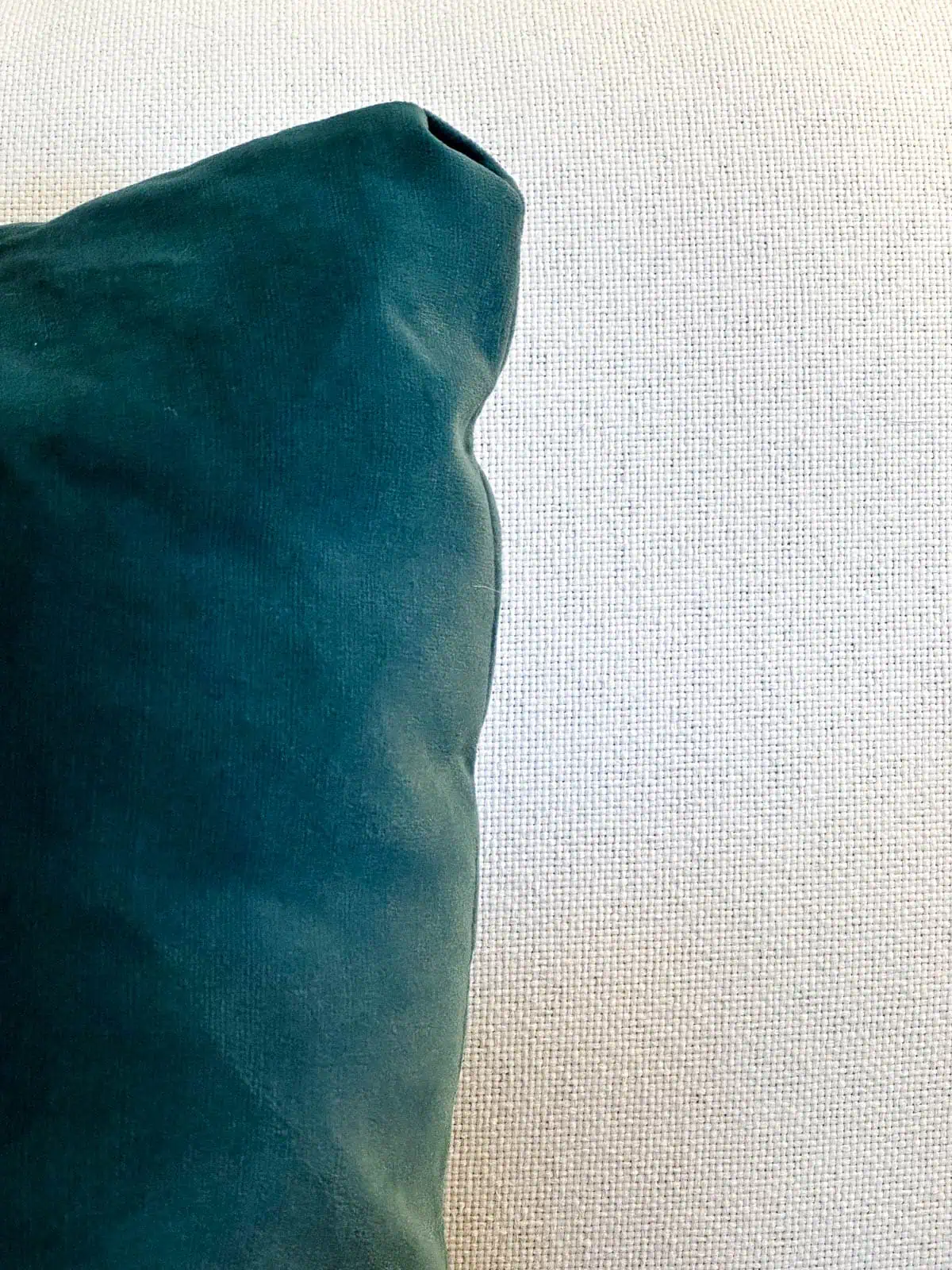
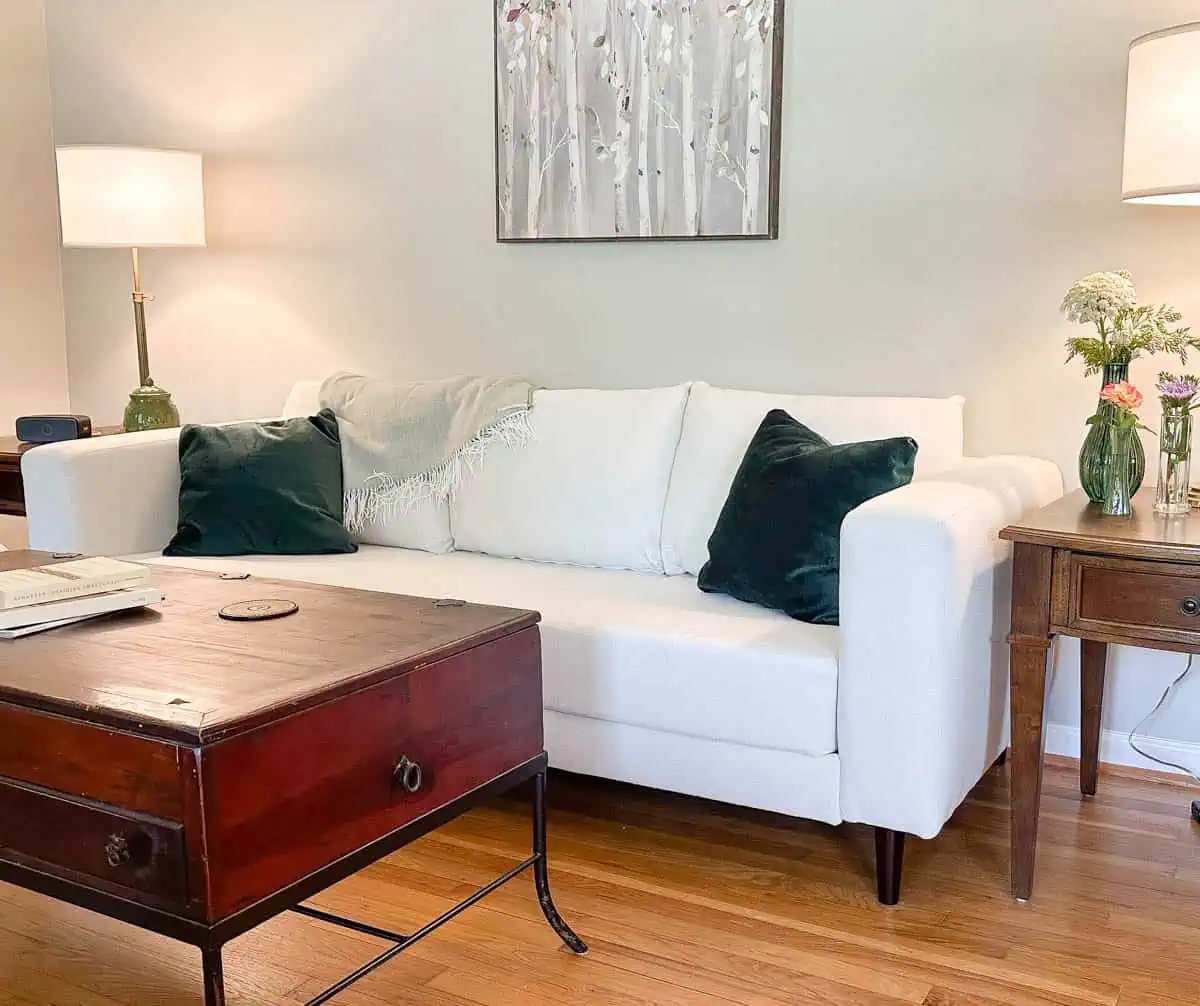
Our final decision was to purchase the Sabai Essential Sofa in the Upcycled Poly fabric and two accent pillows in the green velvet fabric. Our sofa fabric color is oat and the legs are dark brown.
The below image shows the difference between the two fabrics. Note: You may see a hint of yellow around the edges of the image - that's just warmer light cast on the couch from our living room lamps.
🔨 initial reaction and assembly
Our Essential Sofa was delivered via FedEx in a handful of boxes. Sabai did communicate via email with specific expectations about what we'd receive. While they did note that sometimes FedEx delivers different boxes on different days, ours did arrive at once.
The packages are large, but not overwhelming. Cliff and I were both at work when they were delivered, so my parents helped by bringing the boxes inside for us. They were bulky, but light enough for them to get them inside the door.
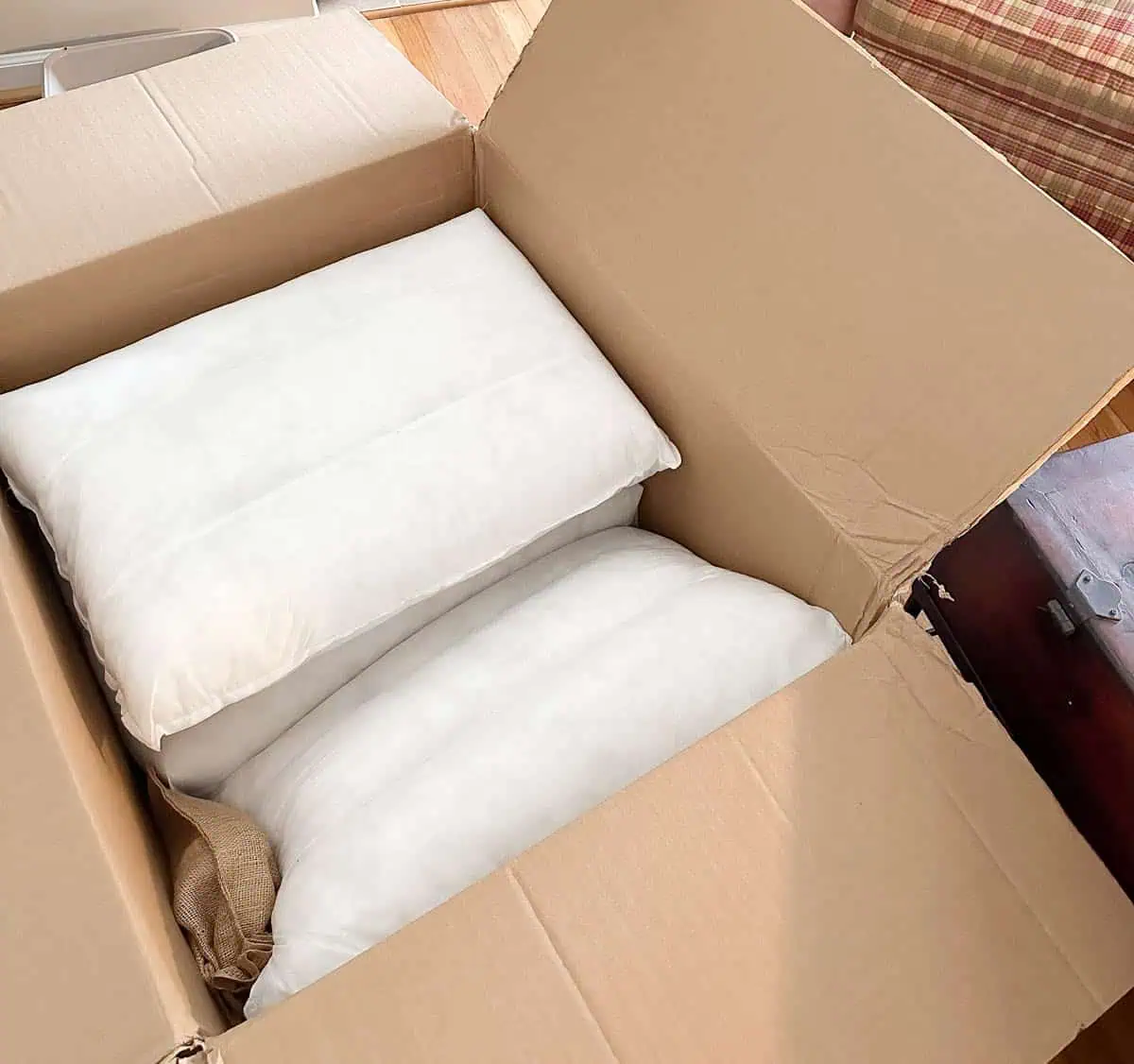
In keeping with their promise of no plastic, the wood legs are sent in a separate burlap bag that includes a smaller fabric bag with the assembly tools. It was cute and eco-friendly!

While Cliff did have some help from my dad, the couch was assembled in a few hours. Clearly, our cats were a critical to that effort.
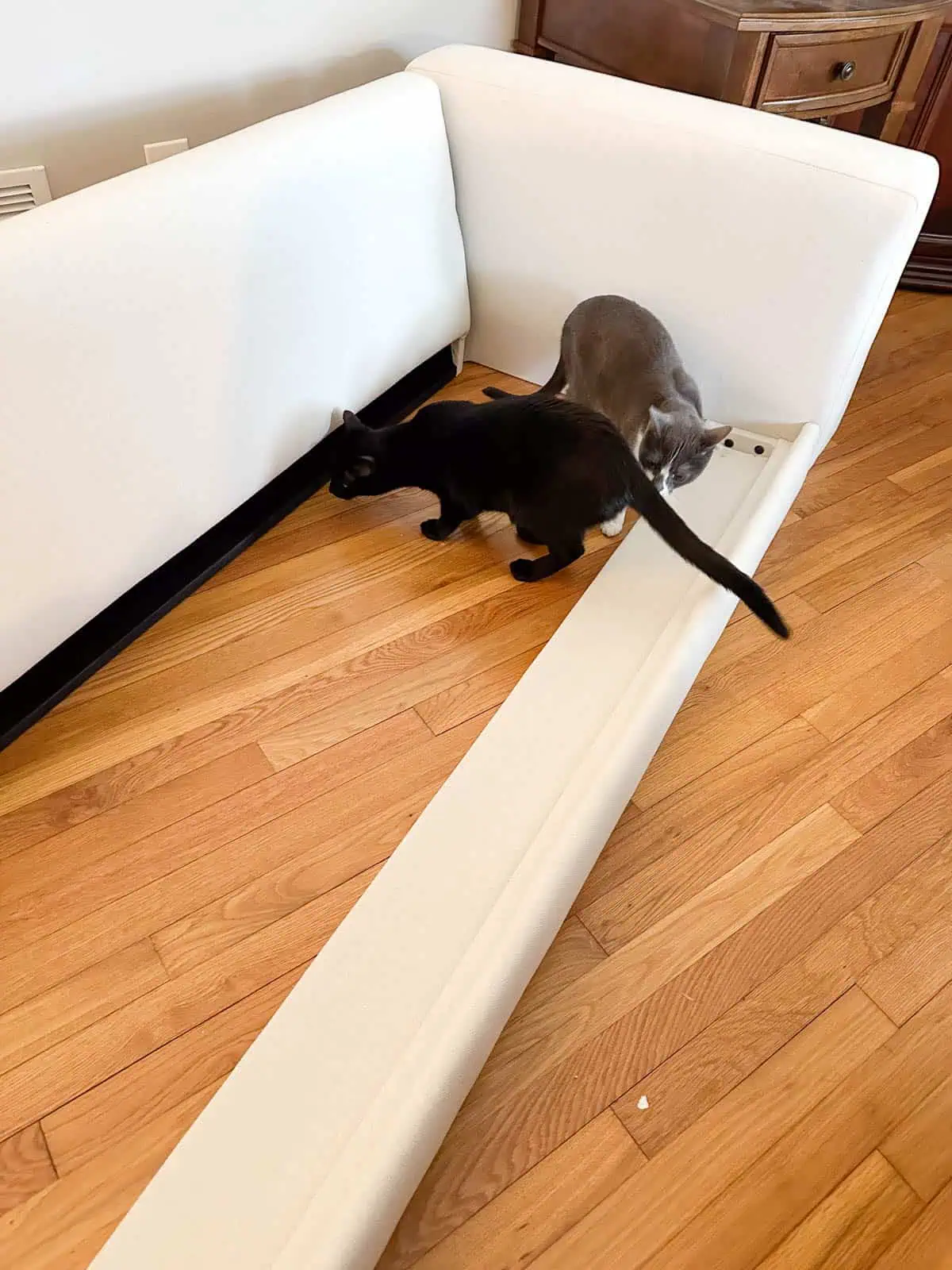
⚠️ NOTE: when unboxing, remember that Sabai doesn't use plastic protective wrap around the pieces, so cut carefully!
🛋️ design and aesthetic
The couch fits right in with our more traditional living room decor. And I'm confident it would be a great fit for any design aesthetic. The couch itself sits ever-so-slightly lower than some we've had in the past, but we measured and were prepared for it.
I love the neutral color with the pop of rich, vibrant velvet that's more cohesive with our space. The green will go with anything, and is even fun to have during the holiday season.
💪 comfort and durability


This is our living room couch, so doesn't get as much use as furniture in our primary living areas. We sit on the couch a few times per week, if that. The infrequency is just because we don't use the room as often, but plan to change that now that I'm home more often.
Pet-friendly. I think our cats intuited the fact I was writing this review and as I was doing so, decided to contribute their own "stress test" to the review. As I walked through our living room, I happened to glance at the couch (that I had just tidied, by the way) and saw that someone lost their lunch. It cleaned up well, and I'll discuss that a bit more in just a minute.
Our cats have left a few claw marks on the couch, but that was our fault for not trimming their nails sooner. Overall, the fabric is holding up well to their clawing attempts and we have put some no-claw tape on the front arms to help discourage them.
The velvet material would probably be slightly more durable to cat claws than the upcycled poly, but we knew that when we purchased the sofa and I've been pleased with how it's held up so far. Plus, with Sabai's Repair Don't Replace program, we can always purchase a new piece, if needed. One of the recommendations we saw online was to use the arm piece as a pet bed (if it ever needs to be replaced). Clever!
Cushion comfort and dimensions. The cushions are firm and supportive without sacrificing comfort. We can stretch out on the couch comfortably; though, Cliff will somtimes kick his feet out at the end near the arm since he is taller. I know my mom appreciates that her feet hit the ground when she sits on it...she's average height and deep couches (even with extra pillows) can be a problem for her.
Cleaning. While the recommendation for upcycled poly fabric is to essentially spot treat an area (my words, not theirs), I took a little risk after our cat's upchuck episode and took the covers off and washed them on gentle in our top-load washing machine. After, I hung them to dry and everything came out fine without any visible leftover stain.
I was also pleased to see another protective layer underneath the exterior fabric and despite not finding the vomit right away, it didn't appear to impact the next layer. If it had, I would have either hand washed or spot treated.
Sabai offers their cleaning details for all fabric types here.
Warning: Below image shows cat vomit.


🚨 Front panel. We are noticing some minor shifting of the front panel where it meets the arms. This isn't severe, so will continue to monitor and address if needed.

warranty
Sabai offers a one-year warranty on anything that arrives damaged or is defective. As with most warranties, there are actions that can void the warranty (like using different legs than what was ordered with the couch). Check out the warranty details on their FAQs page.
⚖️ final verdict
We're big fans of the Sabai Essential sofa and would order it again. We believe in their company values, which makes the sofa even more comfortable, but the beauty is we don't have to sacrifice comfort for supporting a company that's working to make a difference. Plus, the cost is better than many eco-friendly sofas on the market.
When and IF the time comes for us to replace a part of the couch, we're looking forward to using the Repair Don't Replace program and extending the life of the sofa.
If you're on the fence about a piece from Sabai, I hope this helps bring clarity! My suggestion is to give it a try and support sustainable furniture. Feel free to send an email to me at [email protected] if you have any questions about our experience. I'm happy to connect!
For those who may want to give it a try in their home (woohoo!), here's my affiliate link for the couch. Again, this post is not sponsored.
Looking for more eco-friendly items for your home, or as gifts? Take a peek at our eco-friendly gift guide for more sustainable finds.
🗒️ notes
We've used several terms and descriptions that may need some additional context, including:
Off-gassing. Chemicals applied or created during the manufacturing process are often absorbed into furniture materials. When these pieces of furniture are new, they don't have time to release these chemicals before entering their final space. The release of these VOCs (volatile organic compounds) creates an elevated number of compounds in your home, which is then ingested by those in the area. To learn more about off-gassing and it's impact, additional information is available in this Forbes article about toxic furniture.
Certified B-Corp. You may have heard - or seen - this certification used for companies, especially those that promote eco-friendly practices. If an organization is B-Corp certified, it means they meet certain standards for social and environmental impact. They must also offer a more robust level of transparency. You can dive into more details about this process at the B Corporation website.
Formaldehyde. The name is strange, but the definition is pretty simple. Formaldehyde is an organic compound - an odorless and flammable gas - that is commonly used in the manufacturing process of products, including some fabrics, adhesives, etc. that can be found in new furniture. Formaldehyde is associated with negative health effects. More information is available in this EPA article, Facts about Formaldehyde.
FSC Certification. "FSC" stands for Forest Stewardship Council." Their Forest Management Certification has three main tenets - forests must be (1) environmentally sound, (2) socially beneficial, and (3) economically prosperous. Broadly speaking, this means that forests must work to preserve or restore biodiversity and respect ecosystems, follow best labor practices, and profitable NOT at the expense of the forest ecosystem. Learn more (including a short video) at the FSC's Principles, Criteria, and Indicators Revision page.
GreenGuard Gold Certification. GreenGuard Gold Certification is the strictest level of certification acknowledging a product's low chemical emissions (including those VOCs we were discussing earlier). Products with this certification are low-emitting, which creates a cleaner indoor air environment. UL Solutions, who issues the certifications, explains the certification in more detail here.
🏡 product recommendations as you build a sustainable home
If you're interested in what products I use in my home as a sustainability advocate, I'm curating a list with constant updates, recommendations, and more. You can find the list of home goods here.