DIY Seed Bouquet
A DIY seed bouquet is a thoughtful and more sustainable alternative to cut flowers. This really is the gift that keeps on giving, and is much better for the environment!
easy • low waste • great alternative to cut flowers
Would you like to save this?
Disclosure: Some links below are affiliate links. This means that, at zero cost to you, I will earn an affiliate commission if you click through the link and finalize a purchase. As an Amazon Associate, I earn from qualifying purchases.
Jump to:
I understand why bouquets make people feel special. It's such a treat to be gifted with a variety of beautiful flowers that get to take center stage on your table for several days. But, they inevitably die, and that's always a little sad (at least, for me).
But when I learned just how resource intensive these beauties are for the environment, the thought of traditional bouquets took a really dark turn. In the U.S., for example, 80% of the cut flowers sold are imported from other countries. Which means these sensitive plants have to fly in order to make it here in time to still be beautiful. And, they're often grown with lots of pesticides and practices that put a strain on the environment.
So, as pretty as cut flowers are...let's show Mother Nature some love instead and get creative with alternative ideas that are better for the earth, and usually better for the budget as well. That's where these delightful DIY seed bouquets enter the picture.
💜 Check out tips for celebrating Valentine's Day sustainably on our SubStack!
📝 quick project overview
- Difficulty: Easy
- Time: No more than 15 minutes
- Sustainability: High
- Reusability: High, almost all materials can be repurposed
- Equipment Needs: Low

❤️ what you'll love about making your own seed bouquet
Gifting something with a longer lifespan. Your recipient won't need to worry about tossing these out. This bouquet can stay as-is until they're ready to start their seeds!
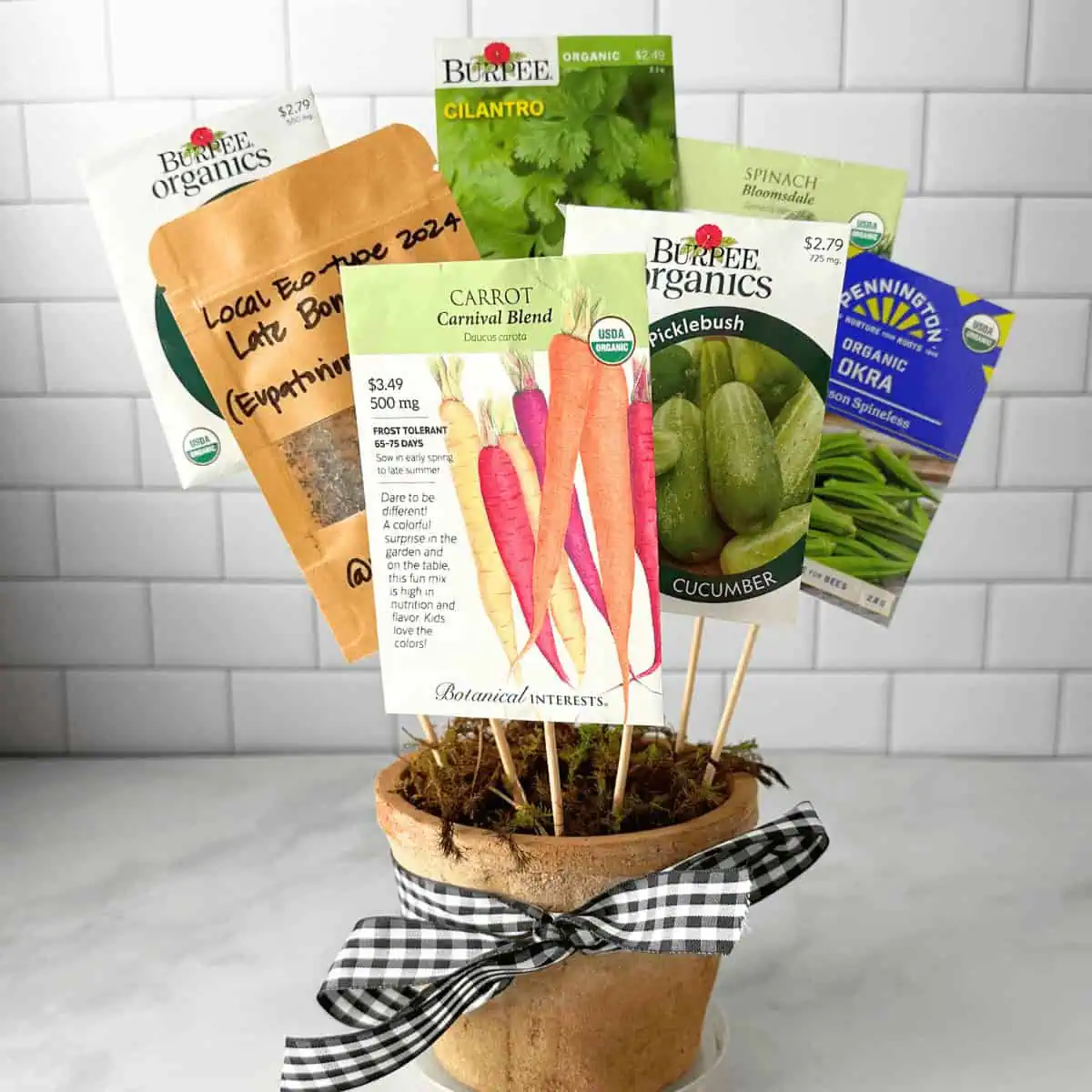
Customizable. Have fun with this! You get to pick the seeds, the pot, the pot filler (I like to use some soil and top with moss from the garden), and the ribbon or other decor. Since this is so easy to make, you have a little more creative control. And, letting that creativity shine is the thought behind the gift that makes it extra special.
Rustic appeal. Of course, you don't have to lean into the rustic aesthetic. I just think it's cute for this application. It makes me think of spending time in the garden amidst its rustic beauty. (I'm writing this post in February, so am eager for warmer weather and more quality garden time soon!)
Easy to make. This is probably one of the more simple bouquets you will ever assemble. You only need a few materials and it's ready in under 15 minutes.
🪴 equipment notes

Pot. I prefer a non-plastic material for the pot to help reduce plastic waste and microplastics exposure. Some really lovely options include terra cotta, ceramic, and stone. Of course, if you have other indoor items that could make a good holder...like a big mug you don't plan to use again...you can always give that a try!
Seeds. Choose a variety of seeds that you think will interest your recipient! I like to have a few different colors represented as well, like the rainbow carrots. Here are a few tips to keep in mind when selecting seeds:
- Purchase organic, when possible
- Check to see if the company uses neonicitinoids...you want to avoid those
- Consider the geographic location of the recipient. Will this plant grow in their region?
- Try to include some native seeds! Many times, these are available at native plant sales, plant fairs, farmer's markets, and more.
Skewers. I like to use a natural material here as well. These bamboo skewers can be repurposed in the garden. 💡 One idea after the seeds have been planted: Write the names of the plants on an old (cleaned) wine cork and poke the skewer into the cork to use as a plant marker!
Tape. This is one of the few items that does get wasted. If you peel the tape off the back of the packets gently, though, you may be able to use it to reseal the packet, if not growing all of them at once.
Decoration. Let that creativity shine! Feel free to have fun with the ribbon choice, or additional decorations added to the container itself! Depending on the time of year, you may be able to cut some of your own flowers from the garden and fill in between the skewers a bit!
🔨 instruction notes


Tape seed packets to skewers. Alternate the height between the packets, so you have some visual interest in the pot and taller skewers can be placed in the back.
Add skewers to pot. Arrange as you like. Shorter packets are usually better placed in the front and sides.
Include decorative touches. I tied a simple ribbon around the pot, but you can also insert filler between the seed packets, if desired!

DIY Seed Bouquet
Equipment
- tape
- trowel optional, if filling with soil or sourcing moss from your yard
Materials
- 1 terra cotta or ceramic reusable pot filled with soil and topped with moss; I prefer a pot that's not plastic
- seed packets opt for organic
- skewers I'm using bamboo skewers that will be repurposed in the garden
- ribbon for decoration, can be sourced from your own collection
- tape for affixing skewers to seed packets
Instructions
- Turn seed packets so back faces up and tape the skewers to the packets at varying heights.seed packets, skewers, tape
- Insert skewers in the pot so taller packets are in the back and shorter are in the front and sides.1 terra cotta or ceramic reusable pot
- Tie a ribbon around the pot and top or insert any other decorations of your choosing!ribbon
Notes
- The pot and skewers are reusable.
- Seeds should be organic and sourced from suppliers that don't allow for neonicotinoid contamination.
- Use decorations that you already have on hand, like ribbon from your ribbon stash, moss from your yard, flowers from your own garden (dependent upon the time of year).
- Consider using native plant seeds as well!
✅ customization ideas
Create specific themes. Here are a few ideas:
- All native
- All vegetables: select vegetable seeds that can grow in the region
- All herbs: choose herbs that are easy to grow
- Flowers: these can be natives, annuals, perennials, or cut flowers
- Valentine's Day: opportunity to provide seeds that need to get started for spring and summer harvests, or all flowers
- Mother's Day: opt for late summer harvesting plants or all flowers
- Father's Day: opt for late summer and plants that can be harvested in fall or winter
- Host/hostess gift
- Cocktail garden (herbs perfect for cocktails and mocktails): mint, basil, rosemary, thyme (various flavors), jalapenos, cucumber, cilantro, lavender, among others
- Tea garden (herbs commonly used for tea): mint, lemongrass, basil, echinacea (take a peek at our purple coneflower guide), thyme, lavender, and more
- Salsa: tomatoes, jalapeno, cilantro, peppers, onions
- Dessert: Mint, lavender, basil, chocolate mint, thyme, chickpeas (yes, you read that right...you can grow chickpeas and they're great in brownies!)
♻️ sustainability profile
sourcing
Pots can be purchased from a number of stores, including thrift, antique stores, and estate sales. Or, shop your house and repurpose pots. As mentioned earlier, try to avoid plastics when you can.
Seeds can be sourced from suppliers that implement responsible production. Check to make sure they aren't exposed to unnecessary chemicals/pesticides. Avoid plants that could be considered invasive for particular regions.
waste
This is a low-waste project. The only true waste comes from tape and seed packaging; though, both may be reused before being discarded.