Purple Coneflower: Plant Profile
Eastern Purple Coneflower (also known by its scientific name as Echinacea purpurea) is a beautiful flowering perennial known for its hardiness, beauty, and support for wildlife.
native to Eastern North America • supports pollinators • easy to grow

Would you like to save this?
Jump to:
- 📌 purple coneflower at a glance
- 🗣️ latin translation
- 🦋 supported species
- ⏳ lifecycle
- 👯 (not quite twins) purple coneflower cultivars
- 🪴 how to grow purple coneflower
- 🙌 companion plant recommendations
- 🤒 potential diseases and maladies
- ❓ frequently asked questions
- 📖 recommended purple coneflower resources
- 🕰️ the latest...
Since starting to transition our landscape to a native one (sourcing and planting native plants), purple coneflower has worked its way into my heart as one of my favorite garden additions. It's a native wildflower that's a powerhouse in its durability, beauty, and contribution to local ecosystems.
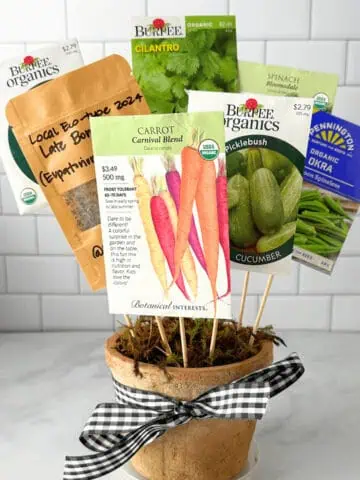
💡 Idea: Purple coneflower seeds make a great addition to a DIY seed bouquet!
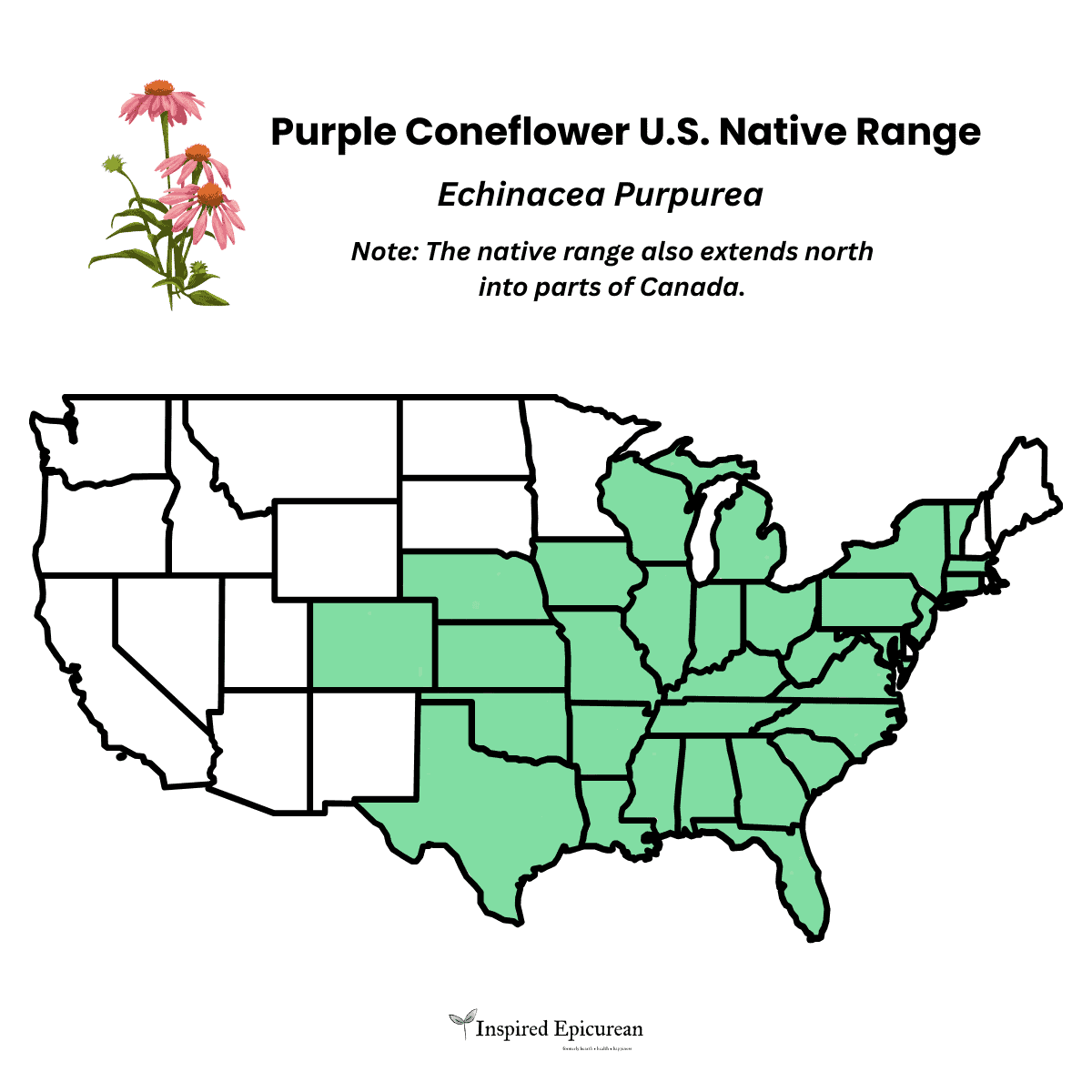
🚨 NOTE: If you're reading this outside of echinacea purpurea's native range in eastern North America, there are alternative plants in the same family that are native to other regions. For example, Rudbeckia occidentalis is native to the western U.S.
📌 purple coneflower at a glance
- Common Name: Eastern Purple Coneflower
- Scientific Botanical Name: Echinacea Purpurea
- Family: Asteraceae (daisy)
- Genus: Echinacea
- Plant Type: Perennial
- Native Range: Eastern North America (grown in Zones 3-8)
- Flower Color: Shades of pink and light purple
- Bloom Time: April (earliest bloom, can start as late as early summer) through September
- Fragrance: Subtle floral scent in select varieties, not known for its fragrance
- Leaf: Deciduous
- Height: 2 - 5 feet
- Spread: Moderate, approximately 2 feet
- Soil Type: Clay, loam, or sand (well-drained soil preferred)
- Sun Requirements: Full sun to part shade
- Water Requirements: A few times per week initially, about once per week (or less) once established and dependent upon soil moisture
- Species Support: Butterflies, bees (including native species), and birds
🗣️ latin translation
The botanical translation for Echinacea purpurea is "purple hedgehog" or "purple sea urchin" effectively describing the pinkish-purple hue of the flower petals and the spiky cone.
🦋 supported species
Birds: Goldfinches, chickadees, blue jays and other small songbirds love purple coneflower for the seeds available to eat in the fall and winter, after the seeds have ripened. While still in bloom, hummingbirds can be found enjoying the nectar from the cone and is a great option to attract these birds to your garden.
🚨 Note: The seeds of purple coneflower are available to songbirds in the fall and winter, which is why it's important to leave the majority of these seed heads available. Instead of deadheading all blooms, or harvesting all seeds for yourself, remember to leave some for the birds!
Butterflies. The following butterfly species consider purple coneflower a "host plant," meaning it's suitable for them to lay their eggs and allow the larvae to feed on the plant leaves and stems:
- Silvery Checkerspot
- Painted Lady
- Southern Skipperling
- Grammia
- Wavy-lined Emerald Moth
Other butterfly families will visit purple coneflower for its nectar, like the popular Tiger Swallowtail. Large-winged butterflies can rest on the large cone as well, as an added benefit!
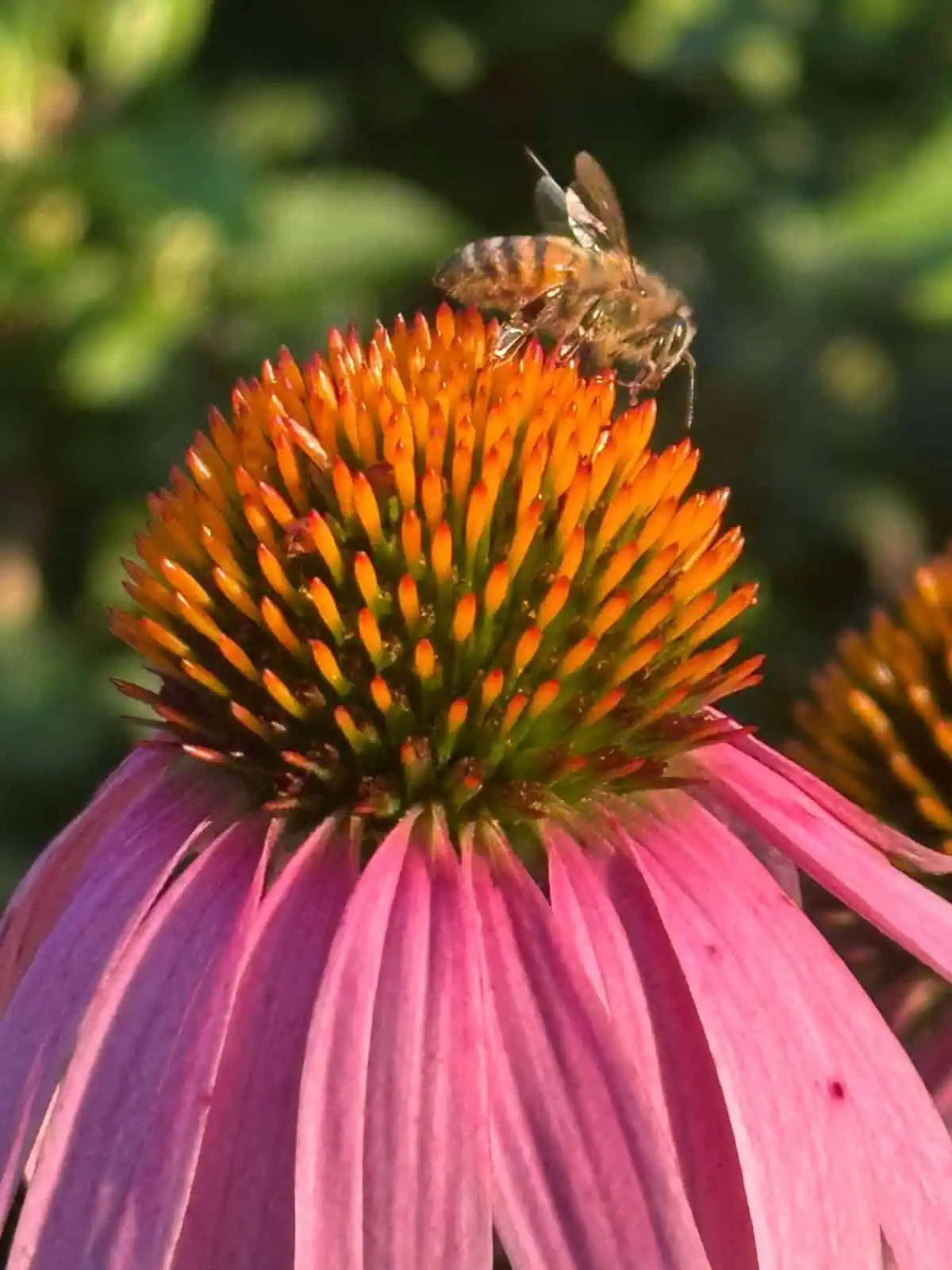
Bees. A wide variety of native bees consume the nectar from the cone, including honey bees, native bees, leafcutter bees, and sweat bees.
🚨 Note: You will provide support for many native bees that nest in stems IF you wait until spring to cut back the stems. Be sure to leave 8-12 inches of the stem above ground (in other words, leave about a foot of stalk) for bees to use as their nest. The new growth will quickly fill in and hide the remaining stalk.
Humans. Both the herbaceous part of echinacea purpurea and its roots have been used for medicinal purposes throughout history. This is the "echinacea" you've likely heard promoted as a medicine for various maladies. I'm not making any recommendations on how to consume this or who should consume this, so please refer to other resources if you plan to grow this for human consumption.
⏳ lifecycle
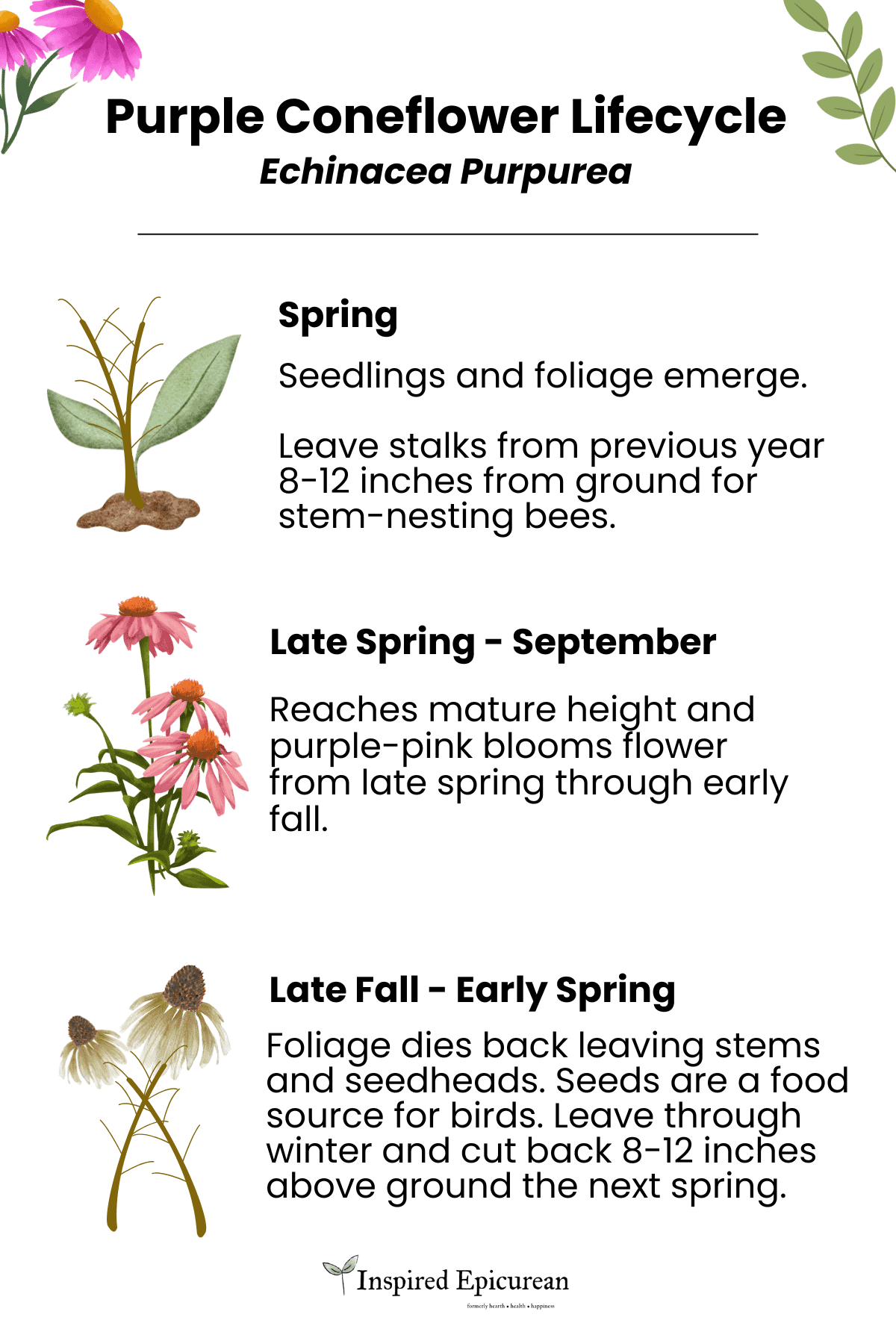
Echinacea purpurea is a perennial that grows from seed, either by self-seeding or harvesting and sowing by humans. Remember this plant is deciduous, so the leaves of existing plants die back in the winter and new leaves emerge in early-mid spring.
Purple coneflower can bloom as early as April, but will typically bloom from early summer (June) through September.
After blooming, the dried seed heads provide a food source for birds like goldfinches.
Remember to leave the seed heads and stalks through the winter. When it's time to tidy your garden in early spring, only cut the stalks back to 8-12 inches above ground so stem-nesting bees can use the stalk for their reproduction.
Plants can live for several years, and when new seedlings emerge each year, your purple coneflower patch will have a consistent cycle of plants season after season.
🍃 leaf characteristics
The leaves of purple coneflower vary in size (depending upon the variety), but most are oval in shape, commonly referred to as "lanceolate" or "ovate." Large veins are visible down the length of leaves, and leaves are organized in an alternate pattern (offsetting) along the stem of the plant.
🌼 flower characteristics
"Distinct" is the term I would lovingly use to describe its flowers. Not only are they striking, but the flower and seed head characteristics are what gives it such a unique name.
The purple petals (also known as "rays") point downward away from the central seed head (disc) that's home to florets of white pollen. As the flower matures and we approach late summer and early fall, the disc will develop seeds that birds can use as a food source over the winter months.
Flower color depends on the variety. Here, we promote the use of native plants (when possible). Purple coneflower petals are traditionally light purple and pink in color.
Source: North Carolina Extension Office
🌰 seed characteristics
The seeds are also known as "achenes" (pronunciation: /əˈkēn/). While seeds and achenes are technically different, the achenes operate as a seed with purple coneflower. Achenes are dry, one-seeded fruits.
As mentioned earlier, the seeds can spread and generate new plants the following spring. It's also helpful to leave the seed heads available for wildlife throughout the winter.
🌱 root characteristics
A strong taproot supports the plant, and provides aeration to the below soil. The additional fibrous root systems works to mitigate erosion, which is a common benefit of native plants.
👯 (not quite twins) purple coneflower cultivars
According to the North Carolina Extension office, below are the identified cultivars and varieties that can produce different colors and characteristics:
- 'Alba'
- 'Amazing Dream'
- 'Avalanche'
- 'Bright Star'
- 'Bright Star' (dwarf variety)
- 'Cheyenne Spirit'
- 'Hot Papaya'
- 'Fragrant Angel'
- 'Glowing Dream'
- 'Harvest Moon'
- 'Kim's Knee High'
- 'Kismet Raspberry'
- 'Magnus'
- 'Mellow Yellows'
- 'Powwow Wildberry'
- POW WOW
- 'Purity'
- Ruby Star
- 'Secret Affair'
- 'Sundown'
- 'Tiki Torch'
- 'White Swan'
Please note that planting different varieties of a native plant does not guarantee it will offer the same ecological benefits. Opinions vary, and research is still needed, regarding whether or not different cultivars can support local ecosystems. For the best chance at providing local ecosystem with the nectar and food source, it is best to source true natives.
🪴 how to grow purple coneflower
growing purple coneflower from seed
While some recommend cold stratification, that's largely not considered a requirement to grow echinacea purpurea successfully from seed. Purple coneflower seeds can be directly sown in the ground in the fall (for cold stratification) or early spring.
If you plan to sow seeds indoors, start this growing process about 8-10 weeks before the last frost, which is when you will transplant them outdoors.
Purple coneflower grown from seed may not produce flowers their first year. Look for healthy leaves and general plant growth in this first year to gauge the health of the plant. As the plant matures and remains healthy, blooms will increase.
self-seeding and spread

We recommend leaving several (if not, all) of the seed heads and stalks over the winter for wildlife to eat the seeds. Inevitably, the seed heads will naturally spread seed on the ground and you're likely to see new seedlings emerge in the spring. You may see seedlings next to the parent plant or up to several feet away.
Self-seeding will help you create larger patches of purple coneflower without the extra expense! Keep in mind that if you have a heavy mulch in your flower bed, it may make it harder for the seeds to land on the ground and germinate. I've had success with self-seeding in a garden that relies on wood chip mulch (we get few fall leaves in our landscape).
division of root ball
Dividing purple coneflower is an effective method of spreading the plant in your landscape. Be sure to wait until the plant is dormant or entering dormancy, in either the very early spring or fall months.
Dig up the root ball with a few inches of buffer around the exterior of the root ball. Shake to remove excess soil and slice through the center of plant, ensuring there are 3 inches or more of root still available for re-planting. Be generous when watering for the first several weeks to help establish the root system.
propagation from cuttings
Propagating from cuttings is likely the least common method, and less reliable than the above-mentioned methods. This Gardening.com article on purple coneflower propagation provides a step-by-step process to generate new plants from root cuttings, specifically.
Please note that perlite (mentioned in the Gardening.com article) is not a renewable resource. If you decide to follow their process, my recommendation is to try their suggestion for a medium of compost and coir.
🙌 companion plant recommendations
These recommendations include plants native to many regions, but please check your native range before making final selections. My garden is located in Zone 8A in the Georgia Piedmont.

Purple coneflower does well when planted in groupings or "drifts," which not only provides a more stunning appearance, but also allows for continuous bloom when some plants inevitably reach the end of their lifespan. While the individual plant only lives 2-5 years (some can live longer), it often spreads through self-seeding and starts that 2-5 year lifespan over through the new plants.
However, there are several plants that make great companions to purple coneflower. Here are a few of my recommendations:
Milkweed. Continue the celebration of pollinators by pairing purple coneflower with a milkweed (native to your region, of course). Milkweed ranges in color from white to bright orange. I love the contrast between the pinkish-purple hue of the purple coneflower with either orange butterfly weed or white swamp milkweed.
Mountain Mint. This pairing is a favorite in my garden. Pollinators LOVE mountain mint and will flock to its blooms throughout the summer. Its height is comparable to native purple coneflower and its delicate white blooms provide a lovely neutral backdrop to the echinacea purpurea's beautiful purple blooms. When planted together, you give pollinators a larger swath of real estate for gathering nectar essential for their survival.
Black-eyed Susans. Talk about a classic color pairing in the garden...yellow and purple. Black-eyed susans are stunning in their own right and create an especially eye-catching display when paired with coneflower. Their blooming season is also lengthy and very similar to purple coneflower (late spring through August or early fall), so will provide visual interest in the garden for several months.
Bee Balm. Consider pairing purple coneflower with bee balm as a lovely attraction for pollinators AND hummingbirds! Our tiny hummingbird friends are attracted to the color and flower shape of both plants. Plus, bee balm blooms for an extended period of time in the garden and looks striking next to the purple echinacea blooms.
Goldenrod. Provide a little contrast to the purple with lacy yellow drifts of goldenrod. This combination will create a bit of a prairie look and adds more texture to the garden.
Gallardia (Blanket Flower). Blanket flower is the pop of color that every garden needs. Stunning colors of the sunset offer a palette of warm colors contrasting the cooler undertones of the purple coneflower blooms.
🤒 potential diseases and maladies
Purple coneflower plants are quite hardy, making them a great option for low-maintenance gardens. The plants can be susceptible to Japanese beetles and leaf spot. To mitigate leaf spot, try to allow for air circulation around individual plants by avoiding overcrowding of other plants (including weeds).
Asters yellow disease can also impact echinacea purpurea. Similar to rose rosette disease, the only option to remove the disease from your garden is to carefully dig up and throw away the entire plant...roots and all.
❓ frequently asked questions
Is purple coneflower invasive?
No, purple coneflower is not considered invasive. Please check with your local extension office if you're unsure of the native range for purple coneflower. While planting outside its native range doesn't mean it's invasive, you should prioritize planting varieties native to your region.
How do you keep purple coneflowers blooming?
Proper growing conditions with abundant sun and well-draining soil helps to ensure a healthy plant that will naturally bloom from late spring through September. You can deadhead flowers throughout the summer to encourage new growth, but do this strategically. Leaving seed heads to dry throughout the winter will provide winter food for your local wildlife, such as goldfinches.
Do coneflowers like morning or afternoon sun?
Coneflowers like sun, but can tolerate some partial shade conditions. If you are planting in an area of your landscape that does get shade, prioritize giving coneflower morning sun and some afternoon shade, especially if you live in a hot region. Coneflowers will perform best with a minimum of 6-8 hours of sunlight per day.
Do coneflowers spread?
Yes, coneflowers can self-seed and spread throughout your garden. New plants can appear in close proximity to your original plant, or travel up to several feet away. Coneflower spread is usually welcomed in the garden as swaths of coneflower are visually stunning, as long as gardeners allow enough air circulation between plants to mitigate disease.
📖 recommended purple coneflower resources
These resources were used for details throughout this post and include both articles and video.
- USDA Purple Coneflower Fact Sheet
- Lady Bird Johnson Wildflower Center Skip the Birdfeeder
- Better Homes and Gardens The Best Plants for Birds That Produce Lots of Seeds to Feed Them
- My Home Park Why are Purple Coneflowers Echinacea Purpurea Important
- Birmingham Botanical Gardens You Can Bee Helpful by Planting Natives
- Backyard Ecology Purple Coneflower
- YouTube: Sag Moraine Native Plant Community How to Grow Purple Coneflower
- NC State Extension Echinacea Purpurea
If you live in the native range for the echinacea purpurea plant, I hope you'll consider introducing it in your garden! Or, if you're already growing it, be sure to share your experience!