Homemade Blueberry Peanut Butter
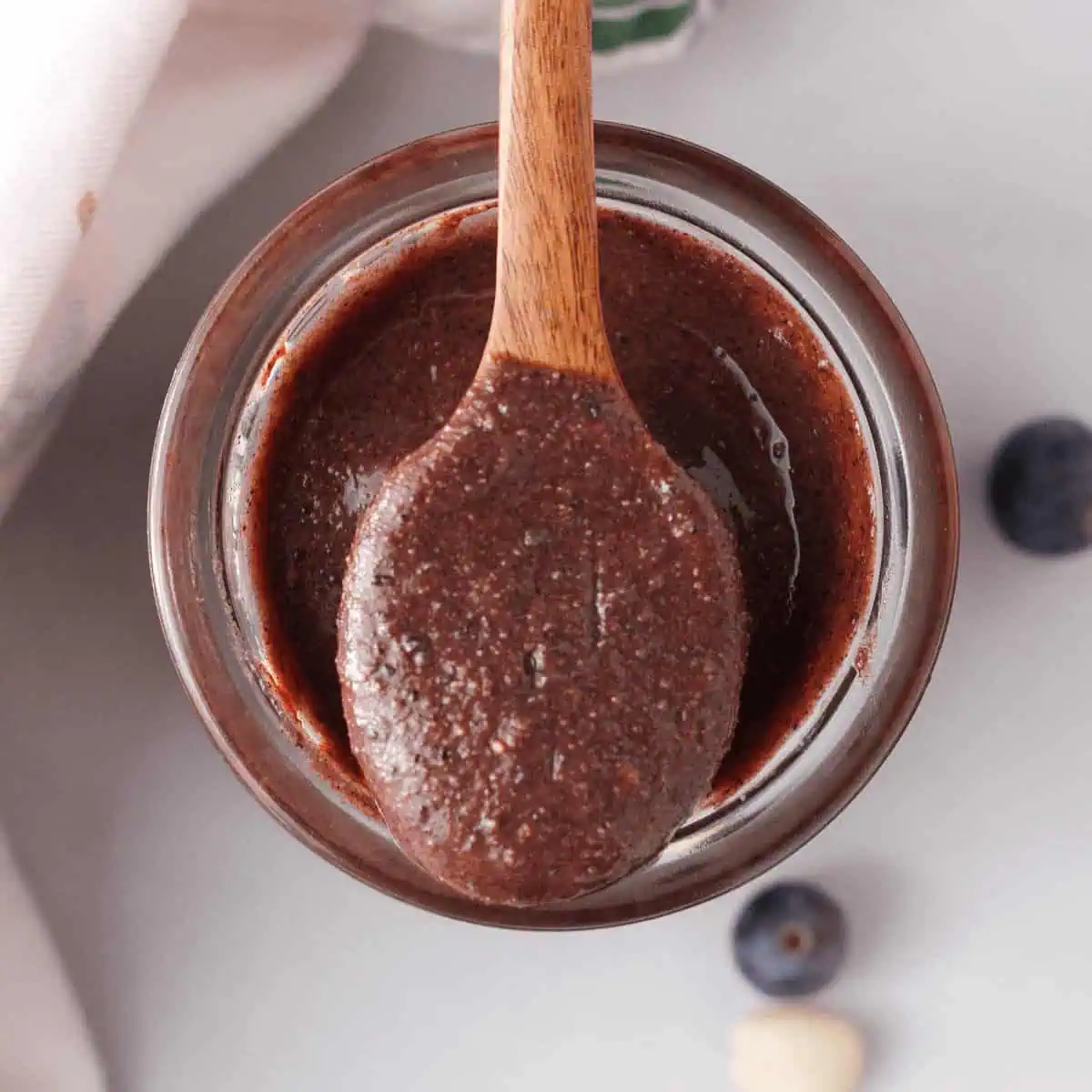
Peanut butter with a sweet twist - blueberries! Homemade blueberry peanut butter has nutty, rich undertones mixed with subtle sweet and tart depth of flavor from dried blueberries. This recipe is perfect for snacks, toast, oatmeal toppings, and more!
vegan • dairy free • easy

Would you like to save this?
Disclosure: Some links below are affiliate links. This means that, at zero cost to you, I will earn an affiliate commission if you click through the link and finalize a purchase. As an Amazon Associate, I earn from qualifying purchases.
Jump to:
- ❤️ Why you'll love blueberry peanut butter
- 🥣 ingredients
- 🔪 equipment
- 👩🏽🍳 step-by-step instructions
- Recipe
- 🧊 storage details
- 💡 pro tip
- ✅ acceptable substitutions and variations
- 🥰 tips for the best blueberry peanut butter
- ♻️ sustainability profile
- ❓frequently asked questions
- ✨ more nut butter recipes
- 🥜 more peanut butter recipes
- 🕰️ the latest...
So many of my favorite recipes revolve around finding simple ingredients and new ways to pair their flavors. Those who are similar in age may remember the launch of Smuckers peanut butter and jelly jar combinations (Goober, I believe). Well, this is a similar twist on the classic peanut butter-fruit love affair.

❤️ Why you'll love blueberry peanut butter
3 ingredients. This recipe only requires three ingredients: peanuts, dried blueberries, and a hint of salt. Each of these can be store bought, or you can dry your own blueberries at home (more on that later).
Versatile applications. The possibilities are endless! Spread on your morning toast or mix in to some oatmeal with your favorite toppings. Even experiment with a new flavor peanut butter cookie. 😉
Easy to make. This doesn't require special tools - all you need are a few appliances. This homemade peanut butter is ready in under an hour.
🥣 ingredients

Raw peanuts. Start with raw, shelled peanuts to do the roasting yourself. If you can't find raw peanuts, you can make this using dry roasted peanuts. I just suggest using unsalted dry roasted so you can control the salt, which means you can control both the sodium AND flavor.
Dried blueberries. This is widely available in most grocery stores, or you can use your own (great opportunity to reduce food waste by drying berries you would have otherwise discarded). Note that most store-bought dried blueberries have added sugar. I created this recipe using store-bought, but note that using homemade dried blueberries gives you control over any added ingredients.
Kosher salt. While this is technically optional, I highly recommend salting to taste. You need a small amount to give this more depth of flavor.
🔪 equipment
Oven. Your oven is needed to evenly dry roast the peanuts, but if you use unsalted peanuts that are already dry roasted, the oven won't be necessary.
Baking sheet. Similar to the oven listed above, this is only necessary when using raw peanuts. A baking sheet is necessary for dry roasting in the oven.
Food processor or high-speed blender. The food processor does all the heavy lifting here. If you have a high-speed blender, you can use that in place of the food processor. Please note the recipe is tested and written using a food processor.
Spice or coffee grinder. The grinder will break the dried blueberries down into a paste.
Large spoon or spatula. Use a spoon or spatula to scrape down the sides of the machine grinding peanuts.
👩🏽🍳 step-by-step instructions


Roast peanuts. Spread the raw peanuts on a baking sheet so they roast in a single layer and roast in a 350 (Fahrenheit) degree oven for 15-20 minutes, stirring halfway through.
Grind dried blueberries. You may need to grind the dried blueberries in 2-3 batches so you don't overwhelm the grinder. Note: The paste is stiff, so you will need to clean the grinder thoroughly after use.
Process peanuts to desired consistency. The peanuts will process in stages (refer to the above images). I start by coarsely chopping the peanuts and then processing consistently (as opposed to pulsing), only stopping to scrape down the sides of the machine and ensure everything is incorporating. Here's a list of the peanut butter stages:
- Coarse chop
- Peanut butter ball
- Uniform paste
- Smooth peanut butter
Add blueberry paste and salt. Once you reach the uniform paste stage, add your blueberry paste and salt. The blueberry paste will incorporate as you process and you should continue processing until you reach your desired consistency.
Taste and add more blueberry paste or salt as desired.
Recipe

Homemade Blueberry Peanut Butter
Ingredients
Equipment
Method
- Preheat oven to 350 degrees Fahrenheit (177 degrees Celsius).
- On a baking sheet, add raw peanuts and spread into a single layer. Bake for about 15 minutes, stirring once halfway through. Peanuts should be a light golden brown and cooled slightly before adding to the food processor bowl.3 cups raw peanuts
- While peanuts are baking and cooling, grind the dried blueberries in a coffee or spice grinder until you have a blueberry paste.½ cups dried blueberries
- Add the peanuts to your food processor and pulse to coarsely chop. Then, grind steadily to break down the peanuts. This will take several minutes. Pause occasionally to scrape down the sides. The peanuts will go through a few phases: coarse, clumpy, paste, and then smooth butter. Depending upon your machine, this process will take anywhere from 10-15 minutes.
- Add the blueberry paste and salt. Grind to incorporate thoroughly. This will take several minutes and follow a similar process to the peanuts - the blueberry paste will clump and then become more smooth. The final consistency is closer to a paste. You will see blueberry specks throughout the peanut butter.1 pinch kosher salt
- Enjoy immediately or store in an airtight container for up to 3 weeks.
Nutrition
Notes
- If you're looking for a uniform blue color, this is best achieved by not roasting the peanuts. However, the peanut flavor will be much more harsh and isn't recommended.
- The blueberry paste requires a little patience to clean out of your spice grinder. Use a damp towel to clean completely (but it's worth it!).
- Note: If you have some fresh blueberries that are at risk of going bad, dry them yourself to use in granola or this peanut butter recipe and help reduce food waste!
Tried this recipe?
Let us know how it was!🧊 storage details
Store your homemade blueberry peanut butter refrigerated and in an airtight container for up to three months.
To extend its shelf life, you can also store in the freezer for up to six months.
💡 pro tip
Grind the dried blueberries in a smaller appliance, which is why we suggest the spice or coffee grinder. This will help get a "finer" grind and allow the blueberry to evenly disperse throughout the peanut butter.

✅ acceptable substitutions and variations
Blueberry. I found dried blueberries to provide the best result compared to ground freeze dried blueberries. However, if you have freeze dried blueberries on hand, feel free to test it!
If you keep blueberry powder in your pantry, you are welcome to test this as well. I haven't tried pre-ground blueberry powder myself, so can't speak to the final result.
Flavor variations. Try incorporating other dried fruit for unique pairings. Start with a 1:1 substitute (3 cups nuts and ½ cup ground dried fruit) and make any adjustments to suit your taste.
Various nuts. While I haven't tested this with other nuts, I expect you would get a lovely result with pecans and cashews (to start!).
🥰 tips for the best blueberry peanut butter

Pay attention to the color of your peanuts when roasting. You want a light-medium brown color and note they will continue to roast for a few minutes after you've removed them from the oven. In fact, they make a fun popping sound kids will probably enjoy. You can see the differences in the above image:
- Left: Peanuts weren't roasted, so it has a deeper blue color. The flavor, however, is very "green."
- Middle: Peanuts were roasted to more of a darker brown. Combined with the freeze dried blueberries ground into a powder, it struggles to come together.
- Right: Our preferred result with a light-medium brown color and subtle blue that shows consistency throughout.
Allow the peanuts to cool a little before processing. This is just a best practice to make sure your machine performs optimally and you get a consistent result.
Taste the finished product and make adjustments as needed. Want a little more blueberry or salt? Feel free to adjust to your liking.

♻️ sustainability profile
Peanuts. While tree nuts are a fantastic and versatile ingredient in plant-based cooking, peanuts are here to be a little competitive. These legumes are a promising crop for sustainability, including:
- Less water use per ounce compared to tree nuts like almonds, pistachios, and walnuts (3.2 gallons per ounce compared to 28.7 gallons per ounce for almonds)
- According to the National Peanut Board, peanuts are a zero-waste crop and the entirety of the plant can be used (fertilizer, hay, biofuel, compost, and cooking oil as examples).*
- Peanuts can support soil health as a rotation crop that helps convert nitrogen to food, meaning they require less human intervention (fertilizers, etc.) to successfully grow.
*I prefer to rely on third-party sources and want to be transparent that this information comes from an industry-specific publication. Much of the data it presents is drawn from impartial, independent sources.
Reduce food waste by drying your own blueberries. It's inevitable in our house that some blueberries we get to use to top oatmeal or eat fresh are a little...beyond help. If there's a major issue with them, toss them in the compost. But, if they just aren't at their prime, a great way to use them is by drying in the oven. Then, you can use to make this blueberry peanut butter, or even blueberry granola (one of our most popular recipes, by the way). Want some details on drying your own? We go into more detail in our oven-dried blueberries video.
P.S. Buy organic blueberries whenever possible. These beautiful fruits are on the Environmental Working Group's Dirty Dozen list. Or - even better - grow your own or buy local.

❓frequently asked questions
What enhances the taste of peanut butter?
Peanut butter is a great partner to many flavors, and enhancing peanut butter can take many forms. Some of the most basic ways to add depth of flavor to peanut butter is adding some salt or vanilla extract, depending on your use. Even when used in small qualities (recommended), these additions will contribute a noticeable difference to the final peanut butter flavor.
It's important to note that roasting also enhances peanut butter flavor. The raw seed itself has a dominant green flavor. When roasted, however, the peanut butter taste becomes more nutty and complex with greater depth that's preferred by most.
Do blueberries taste good with peanut butter?
Yes, blueberries offer a sweet and spicy flavor to peanut butter that complements its nutty undertones. Peanut butter pairs well with many berries like blueberries, strawberries, grapes, and more.
What nuts go well with blueberries?
Blueberries are relatively versatile when it comes to pairing well with nuts. The sweet spiciness of blueberries complements nuts with a rich depth of flavor and somewhat neutral profile. We recommend pairing blueberries with almonds, cashews, coconut meat, macadamia nuts, peanuts, pecans, and walnuts for some classic combinations.
✨ more nut butter recipes
🥜 more peanut butter recipes