Savory Collard Green Stems
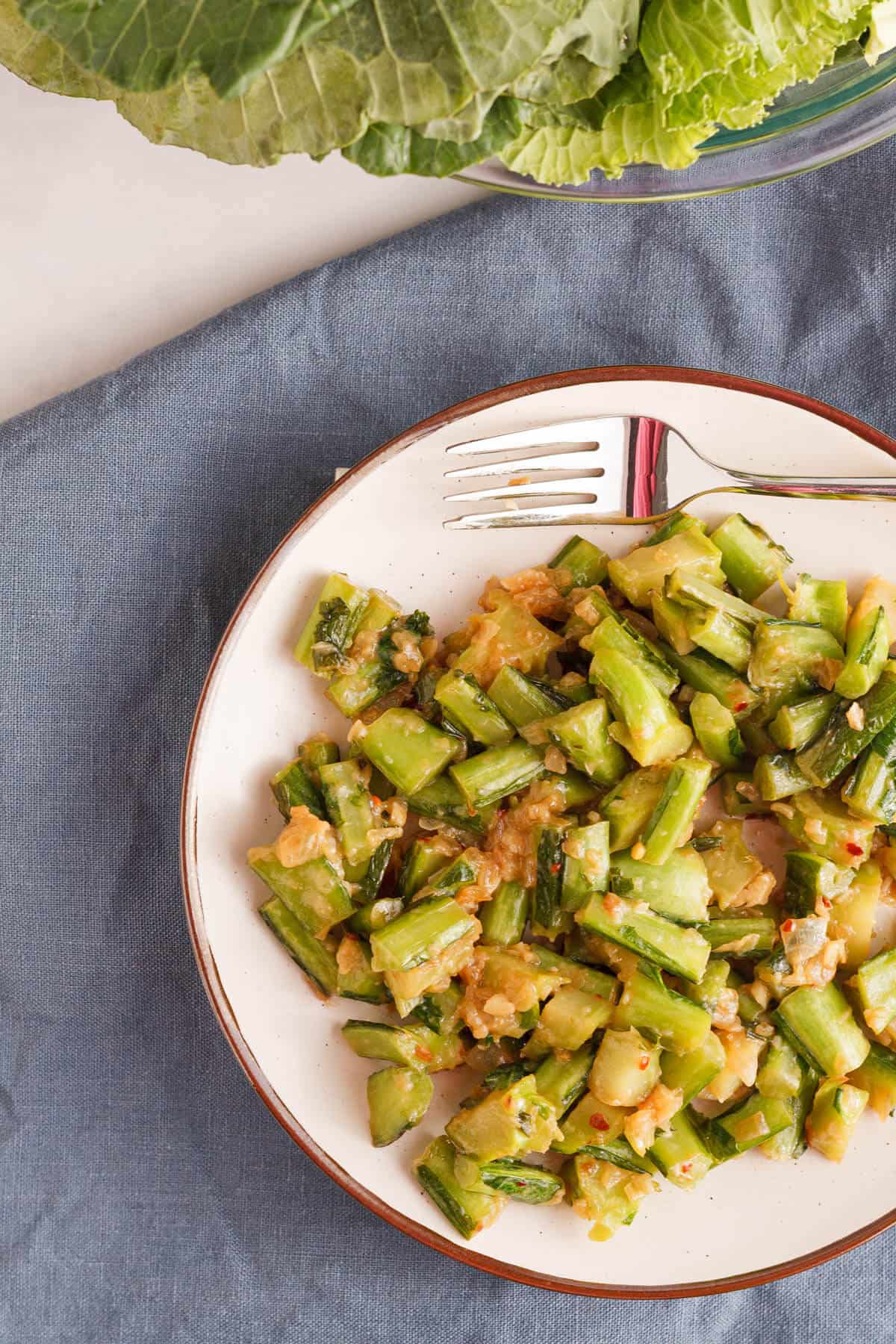
If you're wondering what to do with your collard green stems, the simple answer is save and sauté them! The crunchy centers of these leafy greens are versatile, nutritious, and make a delicious side dish!
vegan • easy • low waste
Would you like to save this?
Disclosure: Some links below are affiliate links. This means that, at zero cost to you, I will earn an affiliate commission if you click through the link and finalize a purchase. As an Amazon Associate, I earn from qualifying purchases.
⚠️ This recipe and post was created, tested, written, photographed, and edited by a human.
Jump to:
- 📝 quick recipe overview
- ❤️ what you'll love about this collard green stems recipe
- 🥣 ingredient notes
- 🔪 equipment notes
- ✏️ notes about preparing collard green stems
- 🧑🏽🍳 visual step-by-step instruction notes
- Recipe
- 🍽️ how to serve
- 🧊 storage
- ✅ acceptable substitutions and variations
- 💡 mistakes to avoid and tips for success
- ♻️ sustainability profile
- waste
- ❓ frequently asked questions
- ✨ more savory vegan side dishes
- 🥣 more food scrap recipes
- 🕰️ the latest
I'm excited to share a unique recipe that takes a common food scrap and turns it into a delicious vegan side dish that's savory, tender, and easy to customize. Collard green stems offer so much more than just an addition to the compost pile.
📝 quick recipe overview
- Skill level: Easy
- Taste: Savory and infused with umami flavors and kick from peppers
- Waste: Low
- Sustainability: Highly sustainable ingredients, including food scraps. Scraps from this recipe can be repurposed in other recipes or home compost systems.
- Cleanup: Easy
- Ingredients: Common, easy to source
- Equipment: Common, easy to source
- Time: Ready in less than 30 minutes
- Consistency: Tender with a bit of crunch
- Kid-friendly: Omit red pepper flakes to make it more appealing for kids
❤️ what you'll love about this collard green stems recipe
Putting food scraps to good use. Keep stems out of the landfill and create a new dish without needing to buy more greens. Extending the impact of ingredients is a beautiful thing.
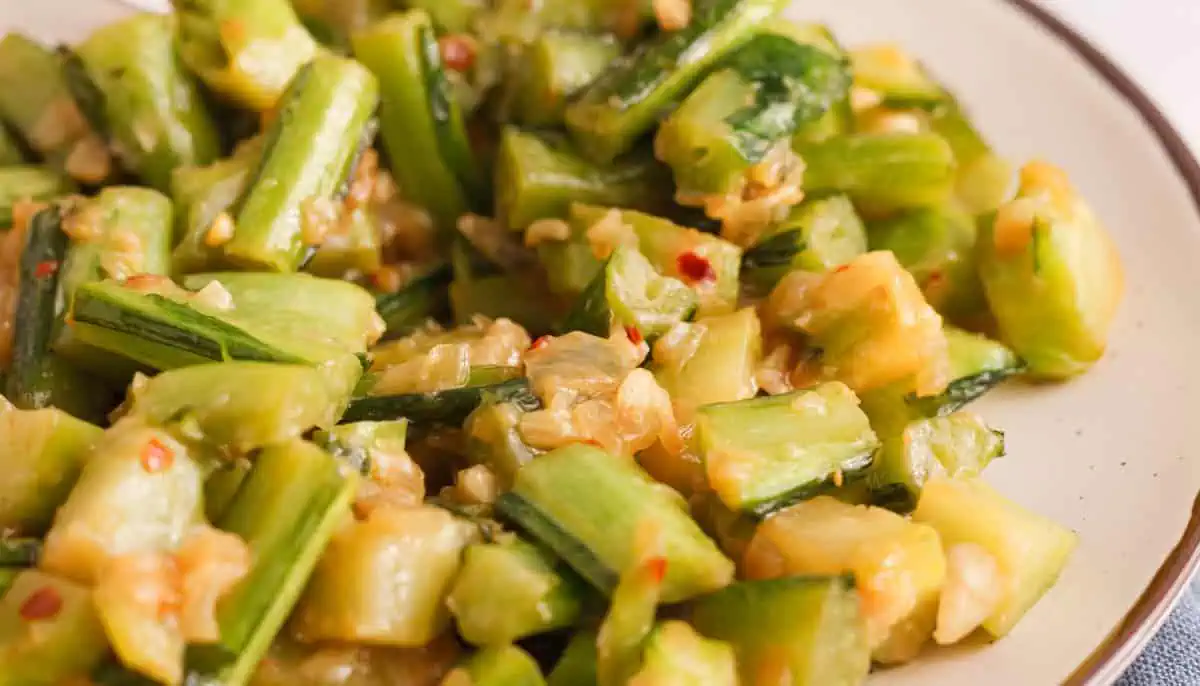
Savory, umami flavor that has a little more kick than a traditional "leaf only" recipe. I could call this recipe miso-garlic sautéed collard green stems because I lean into both ingredients here. If you prefer a more mellow flavor, you can absolutely customize the seasonings and amounts.
Fiber and nutrient-dense side dish perfect for a variety of meals! The stems of leafy greens typically contain the same nutrients as the leaves themselves, and we all know leafy greens are nutrient powerhouses! Plus, the fibrous stalk has a really nice texture when cooked.
Easy to make and ready in less than 30 minutes.
🥣 ingredient notes

main ingredients
- Collard green stems: Save the stems from other collard green recipes and slice into bite-sized pieces
- Diced yellow onion
- Minced garlic
- Extra virgin olive oil
glaze and seasonings
- Mellow white miso paste: I like the mellow flavor of the white paste to balance the collard green flavor
- Water: Warm is best here, to better dissolve the miso paste
- Garlic powder: Just a pinch of granulated garlic helps make sure we get the flavor throughout the dish
- Salt: Just a pinch because of the sodium in miso
- Red pepper flakes: Optional, but I think it balances the salty miso best
Please review the recipe card for the ingredient measurements.
🔪 equipment notes
for prep
- Knife and cutting board: For collard green stems, onion, and garlic
- Small bowl and spoon: For dissolving miso paste in water and stirring in seasonings
- Measuring cups and spoons
to cook
- Medium skillet: About 10 inches or larger will well
- Spatula
✏️ notes about preparing collard green stems
💦 Wash and dry the stems thoroughly before cooking. Leafy greens come from the ground, after all, and it's common to find bits of dirt and sand hiding throughout the leaf and stem.
🔪 I encourage you to leave some stem with the leaf when making traditional collard greens. This recipe is a great option for the bottom of the stems, where less leaf is attached.
- If you prefer to completely remove the stem from the leaf, you can do this with a knife or gently tearing with your hands.
- Note that the very woody bottom of the stems are best added to your compost.
🧑🏽🍳 visual step-by-step instruction notes


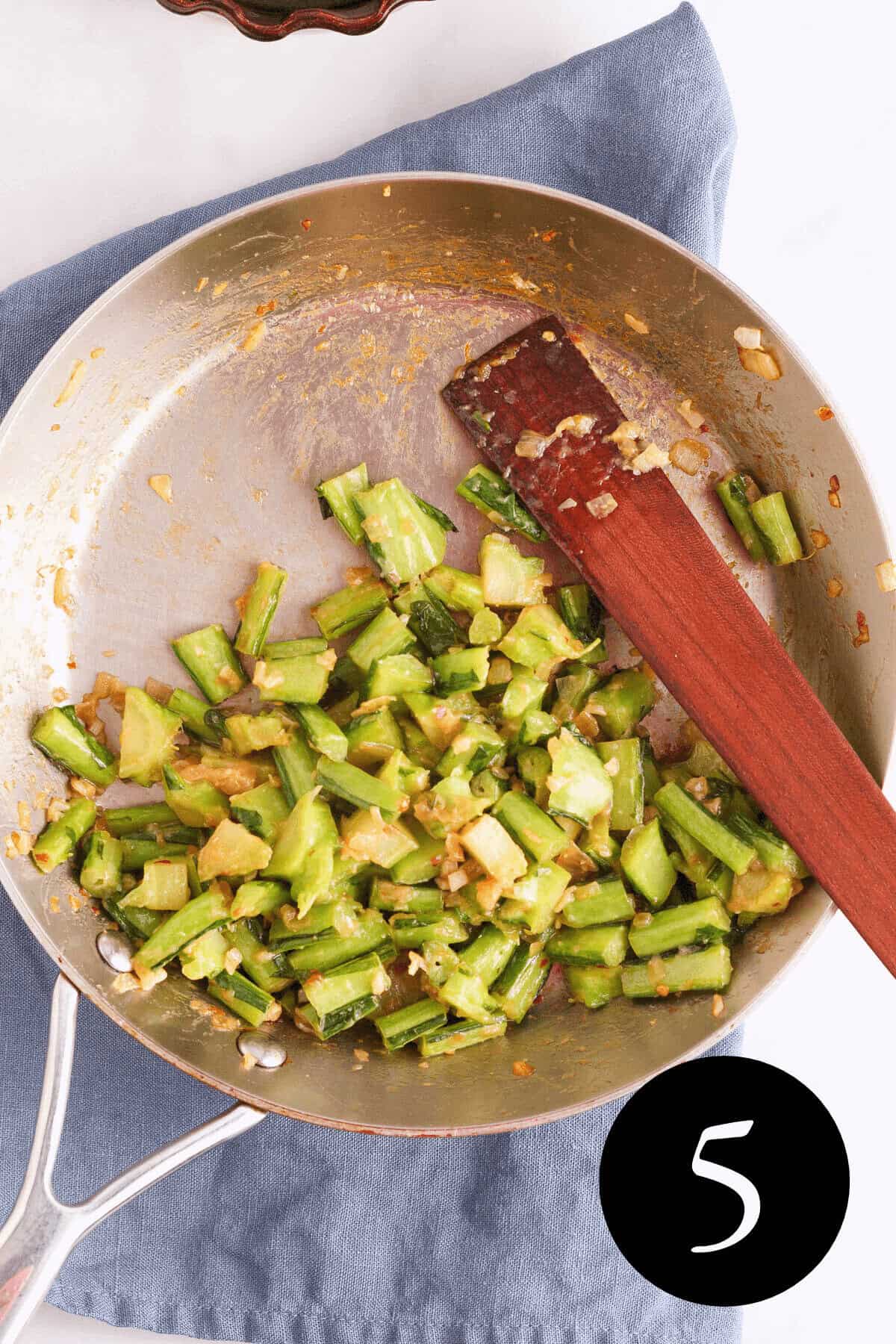

- Mix miso paste with water and seasonings. Stir well until no clumps remain.
- Sauté diced onion in olive oil until translucent. Move to the next step once they start to become translucent.
- Add collard green stems. These will take several minutes to cook and achieve the more tender texture we'd like.
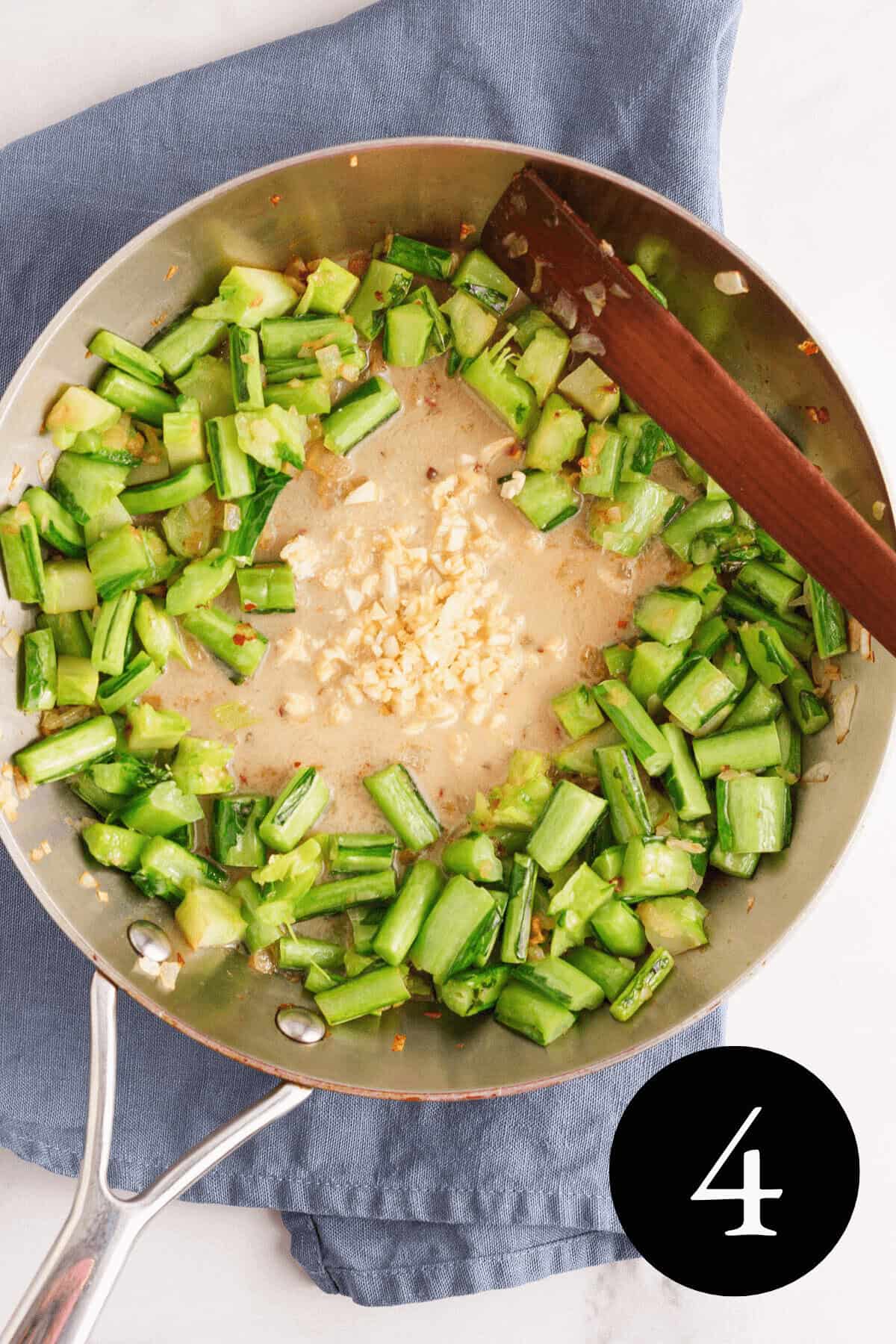
- Create space in the middle and pour in miso paste mixture. The space in the center gives us a little room to cook the garlic before incorporating throughout the rest of the skillet.
- Stir the collard greens and miso mixture for several minutes. At this point, we just want to make sure the glaze thickens and distributes and the stems are tender enough to enjoy.
- Serve warm or mix in to another dish, like cooked rice.
Recipe
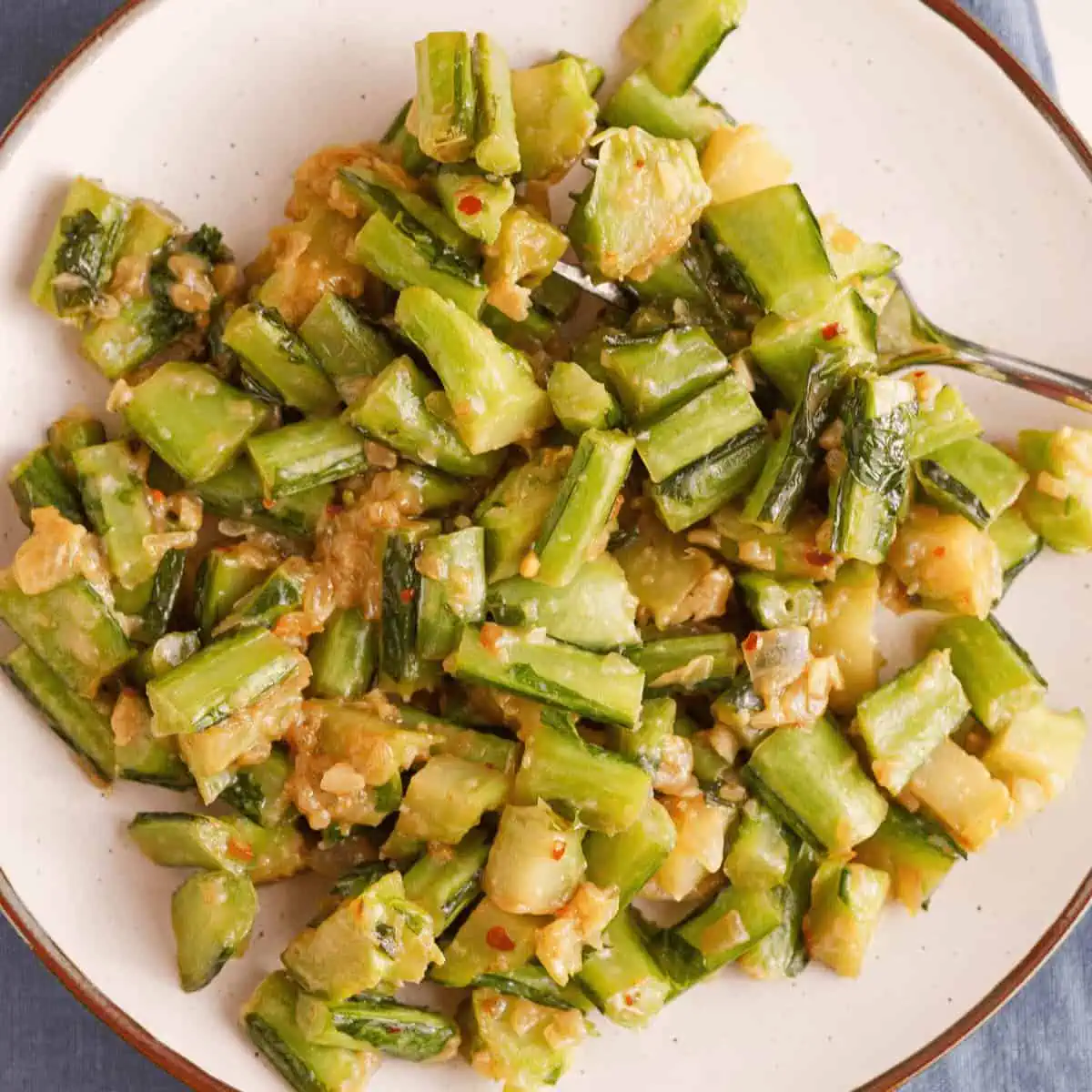

Savory Collard Green Stems
Ingredients
Equipment
Method
- Mix warm water into a small bowl with the miso paste, stirring to dissolve the paste completely. Stir in the minced garlic and seasonings until distributed.2 cloves garlic, ¼ cup water, ⅛ teaspoon granulated garlic, ⅛ teaspoon salt, 2 teaspoon white miso paste, ⅛ teaspoon red pepper flakes
- In a medium skillet over medium heat, sauté diced onion in olive oil for 3-4 minutes, or until the onions start to become translucent.⅓ cup yellow onion, 1 tablespoon extra virgin olive oil
- Add the diced collard green stems to the skillet with sautéed onions and cook until the stems start to become tender and move just beyond their vibrant green stage.2 cups collard green stems
- Push the greens to the edges of the skillet, leaving some room in the center. Pour in the miso-garlic mixture to the center and allow the garlic to briefly cook before starting to incorporate all ingredients.
- Stir to coat the collard stems in the miso mixture. Cook for another 3-5 minutes before removing from heat. The collard stem edges should look a little darker and are more tender than when we started cooking.
- Serve warm or store for later use.
Nutrition
Notes
- Reserve the onion peels for a homemade vegetable broth.
- Keep the garlic peels for a homemade vegetable broth, or homemade garlic powder.
- If you have collard green leaves leftover, either sauté in this recipe, or use for more traditional collard green preparation.
- Onion, garlic, and collard green remnants are safe for home compost systems.
- Adding the fresh garlic too early.
- Not washing stems well and allowing grit to stay on the stems.
- Over or undercooking. Use your judgement based on your skillet and stovetop settings.
Tried this recipe?
Let us know how it was!🍽️ how to serve
Side dish. Hearty, yet tender, and vibrantly green, I love this as a versatile side dish.
Mix-in. Consider adding it to some cooked rice or quinoa as a vegetable mix-in.
Best served warm. When warm, the glaze becomes more even and the flavors work well together.
🧊 storage
Short-term storage. Cooked stems can be stored in an airtight container in the refrigerator for up to a week. Reheat in a small skillet with a little olive oil before serving. The leftovers are just as delicious!
Long-term storage. Raw collard green stems can be frozen for longer-term storage, usually up to a month.

✅ acceptable substitutions and variations
Stems from other leafy greens. You can certainly experiment with the stems from other vegetables, like kale, chard, and others. Some stems may be more tender than others, so pay close attention to cook time and either lengthen or shorten their time in the skillet accordingly.
Seasonings. Of course, feel free to adjust the seasonings to your liking! Try vegetable broth in place of miso, or adding other savory-friendly spices to the dish like cumin, etc.
💡 mistakes to avoid and tips for success
- It may be tempting to add the minced garlic with the onions, but it's best to avoid! The stems of the collard greens are hearty and need a little longer to cook than some vegetables. And, cooking the garlic too long will result in a burned, bitter experience. No thanks.
- Dissolving the miso paste in warm water will help make sure the paste is completely dissolved. It helps to avoid clumps, so the mixture can be evenly distributed when added to the skillet.
- Cutting the collard green stems into bite-sized (approximately one-inch pieces) will help them cook evenly.
♻️ sustainability profile
sourcing
Choose organic, when possible. Or, discuss pesticide use with the seller if buying from a farmer's market. Collard greens are also possible to grow at home.
Choose spices and seasonings from brands that support fair trade and organic initiatives. Look for certifications on the label or website. Bonus points to any companies that practice regenerative farming as well.
waste
The stems themselves are typically discarded, so using them in a recipe is already low waste!
Onion and garlic skins. Add the onion and garlic skins to a homemade vegetable broth or dry and grind into onion powder or garlic powder.
Composting. Any scraps you discard from onions, garlic, or the stems themselves are also fine to add to your home compost.
❓ frequently asked questions
Can you eat collard green stems?
Absolutely! You just need to make sure the stems are cleaned thoroughly before cooking, pickling, juicing, or incorporating into a larger dish. The stems are a fibrous and nutritious part of the plant that are easy to transform into a delicious dish in and of themselves!
What are the benefits of collard green stems?
Eating collard green stems has several benefits, including reducing kitchen waste that will just end up in the landfill, incorporating a nutritious and fiber-packed vegetable into your diet, and enjoying a tasty vegetable that has a tender crunch making it a perfect side dish.
Are collard green stems bitter?
Raw collard green stems are bitter, as are most leafy greens and their fibrous stalks. However, when cooked in aromatics and seasonings, the bitterness fades and finds balance with the added flavors. Eating cooked collard green stems should not impart a bitter flavor.
Are the stems of collard greens good to eat?
As I hope this recipe shows, they collard green stems are absolutely good to eat! You can customize their flavor with your favorite ingredients, and enjoy a vegetable that's both tasty and has a great texture when cooked.
✨ more savory vegan side dishes
🥣 more food scrap recipes
- Popcorn Pancakes (using food scrap popcorn corn flour)
- Popcorn Bark
- Strawberry Top Simple Syrup
- Avocado Seed Powder (for the garden)
- Homemade Blackberry Powder