American Beautyberry Jelly Recipe (Small Batch, No Pectin)
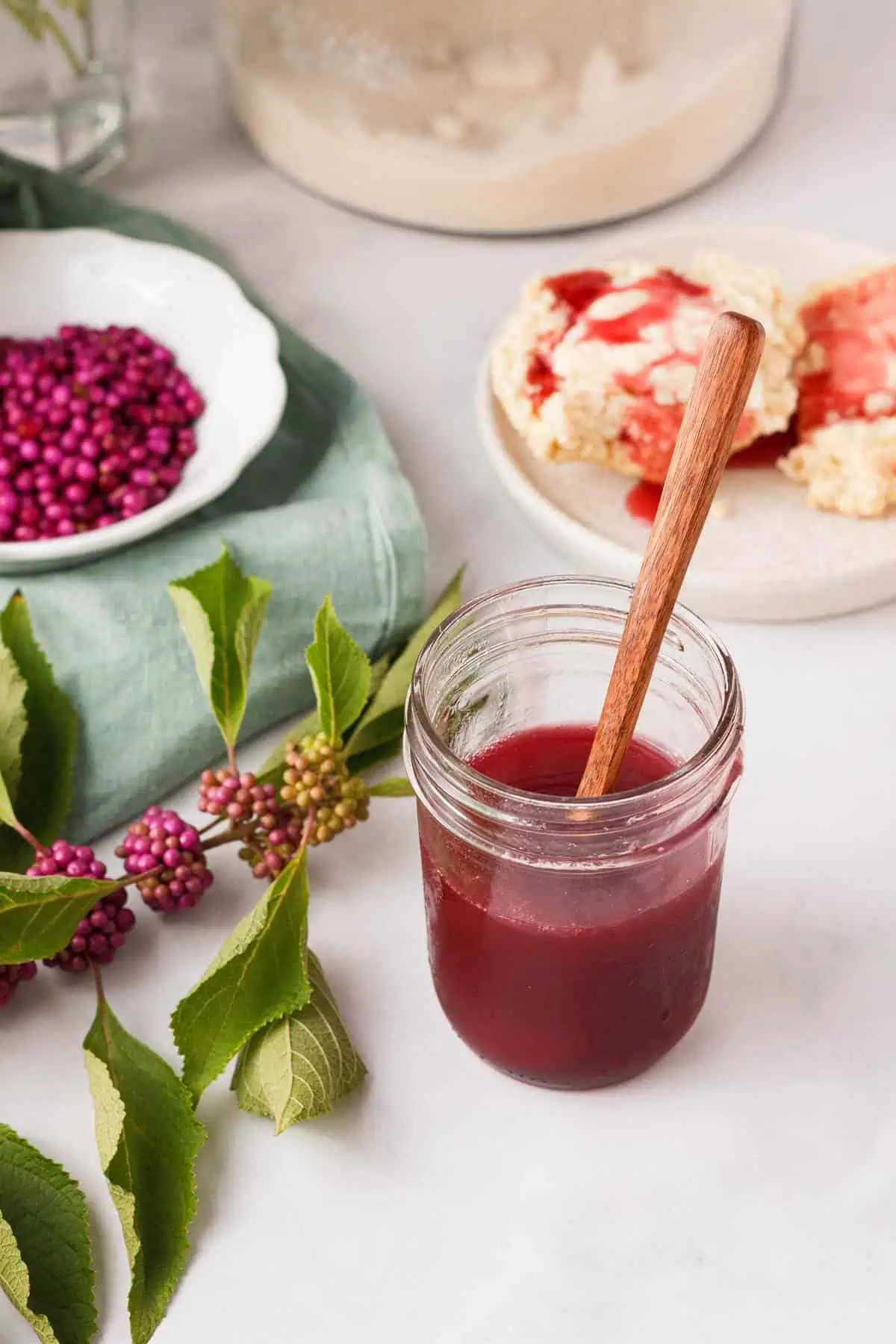
Beautyberry jelly is an autumn favorite: beautiful and tasty with sweet, subtle berry and floral flavor. This recipe requires no pectin, just simple ingredients for a small-batch version that still leaves plenty for wildlife to enjoy.
vegan • no pectin • garden-to-table • easy
Would you like to save this?
Disclosure: Some links below are affiliate links. This means that, at zero cost to you, I will earn an affiliate commission if you click through the link and finalize a purchase. As an Amazon Associate, I earn from qualifying purchases.
Jump to:
- 📝 quick recipe overview
- ❓ what is beautyberry?
- 💡 a note about harvesting beautyberries
- 🩷 what you'll love about this beautyberry jelly
- 🥄 texture notes
- 🥣 ingredient notes
- 🔪 equipment notes
- 🧑🏽🍳 instruction notes
- 🥫 for those interested in canning beautyberry jelly
- Recipe
- 🍽️ how to serve
- 🧊 storage
- ✅ acceptable substitutions and variations
- ♻️ sustainability profile
- waste
- ❓ frequently asked questions
- 🌱 more ways to bring the garden to the table
- 🕰️ the latest
The native American beautyberry shrub (Callicarpa Americana) earns its place in the landscape before the berries ever make it to your kitchen table. From beautiful, late-season visual interest in the garden to a unique floral and slightly sweet flavor perfect for jams and jellies, beautyberry is a great example of a plant that pulls double duty. If you live in its native region, I highly recommend incorporating it into your landscape.
If you've never tried beautyberry jelly or jam before, you're in for a real treat! Just remember, leave the uncooked berries for wildlife...the cooked flavor is what we want in our jam. 😉
📝 quick recipe overview
- Skill level: Easy
- Taste: Floral, slightly sweet
- Sustainability: High
- Waste: Low
- Cleanup: Easy
- Ingredients: Moderately easy to source
- Equipment: Basic kitchen tools
- Time: 45 minutes
- Consistency: Spreadable
- Kid-friendly: Yes
- Best for: Topping biscuits, toast, or other pastries
❓ what is beautyberry?
Beautyberry is a shrub native to North America that produces small, clumping purple berries on lengthy branches. The beautyberry shrub is a favorite in native gardens and supports a variety of wildlife, including birds who feed on the berries during the summer-fall transition. Berries ripen late summer and are best enjoyed cooked and mixed with sweetener.
For me, what makes beautyberry special is the opportunity to share with nature. As one of the last berries in our area to ripen before winter, it's a food source for birds and other wildlife. Enjoy this in moderation and leave plenty for others.
💡 a note about harvesting beautyberries
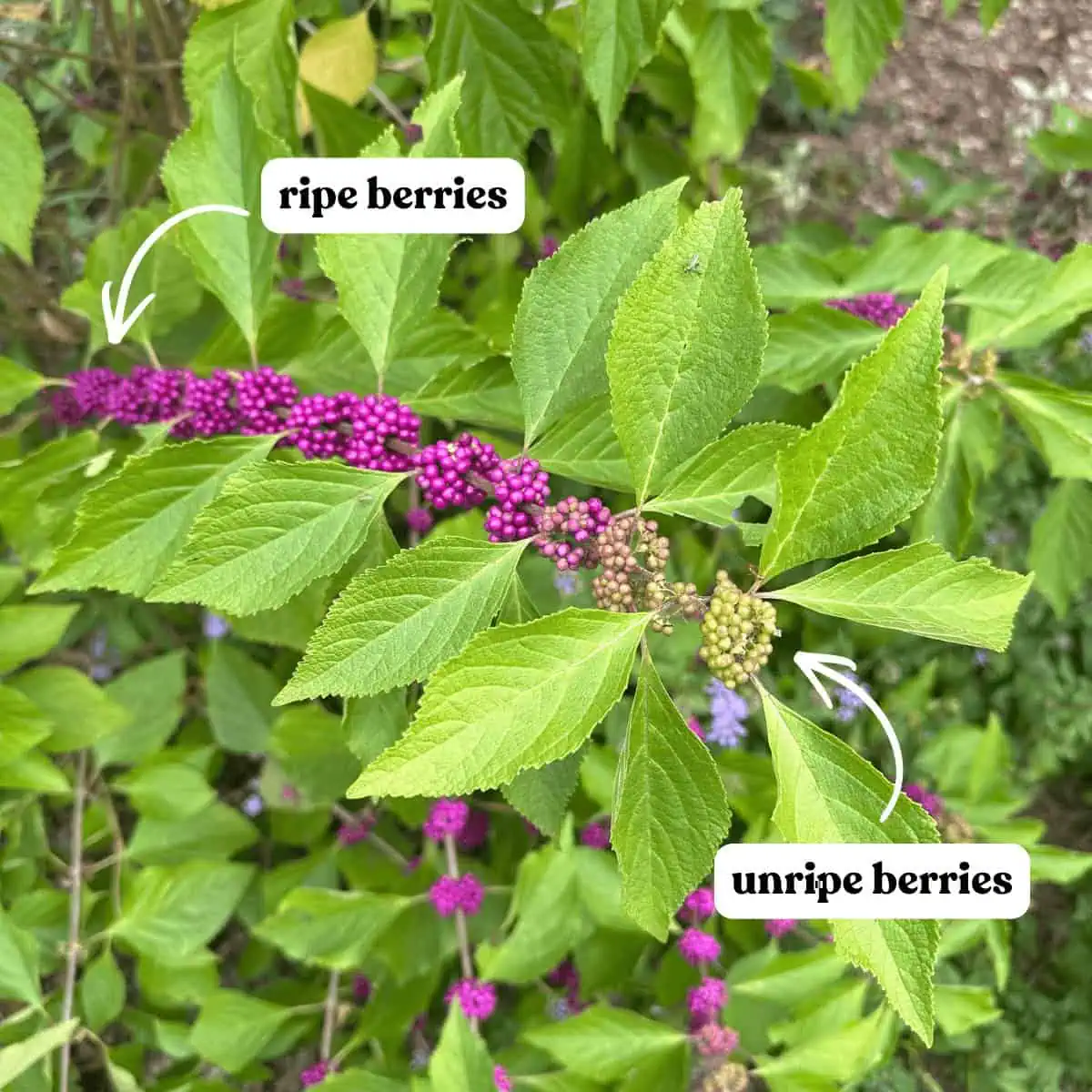
- Understand what's ripe and what's not. When ripe the beautyberries will turn a vibrant purple color. Unripe berries are light and not yet a deep purple.
- Make sure you properly identify the plant, and you only harvest from areas where you're allowed to do so and you can identify as safe. That's why I like growing my own. I know it hasn't been sprayed with pesticides, etc.
- Sometimes, beautyberry can be mistaken for pokeberry, porcelain berry, among others. The Foraged Foodie offers a little more insight into identifying beautyberry and a helpful reminder to only eat the purple variety...avoid white berries!
- Please leave the majority of the berries for wildlife. That's why making small-batch jam or jelly is best, in my opinion.
🩷 what you'll love about this beautyberry jelly
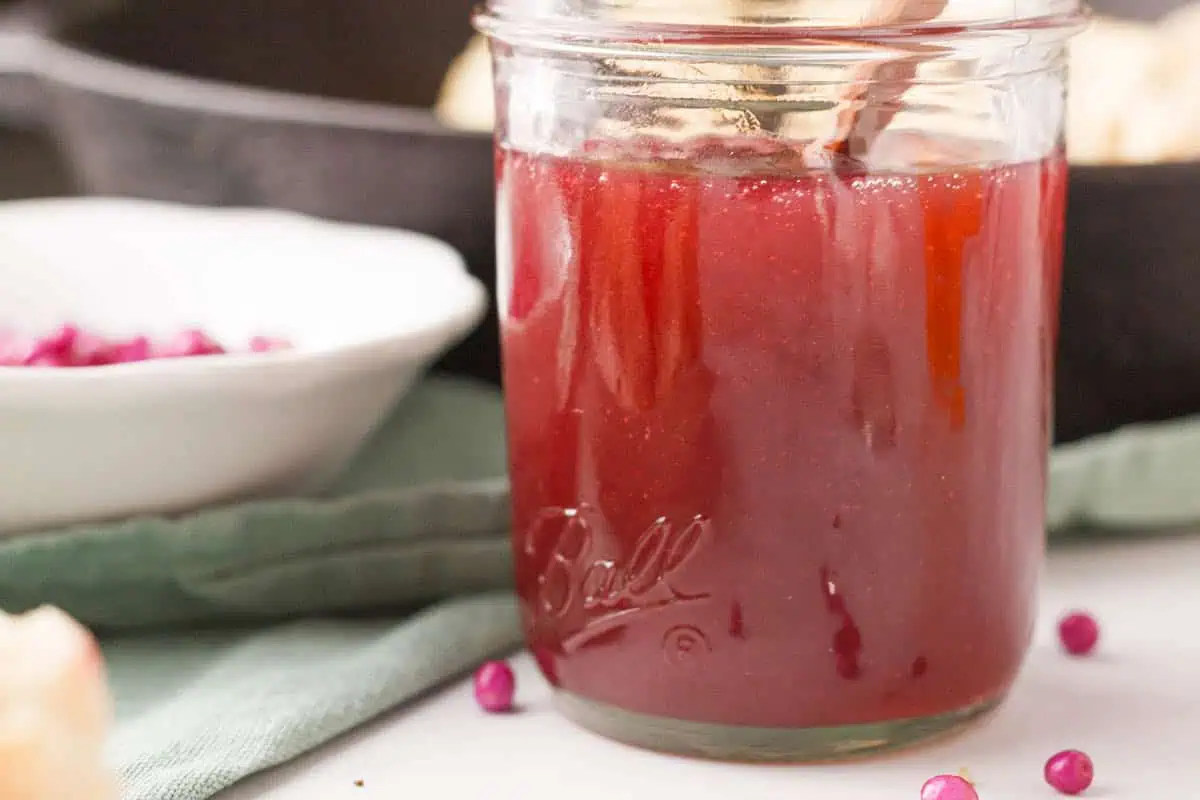
Beautiful color and flavor. Not only are the berries beautiful on the shrub, but they impart a really pretty hue to the finished jelly. The flavor is sweet, delicate, floral, and has a hint of fruitiness.
🎨 A note about color: While making this, you'll see the berries go from bright purple to muted peach and back to a jewel-toned magenta. It's really an interesting transformation to watch!
Small batch. Since beautyberries aren't sold commercially, you'll likely need to harvest these from your own shrubs, or a friend's. Harvesting beautyberries is a little labor intensive because the berries cluster around the branch. I recommend making these in small batches and leaving some for wildlife as they prepare for winter.
Easy to make. No special tools or ingredients are needed here. Some recipes call for straining through a cheesecloth or thickening with pectin. We skip both of those here.
No pectin necessary. You don't need to have pectin on hand to enjoy some fresh beautyberry jelly. We thicken this with an arrowroot powder slurry, using the same technique we apply to some of our syrups like sugar-free simple syrup, thyme simple syrup, and strawberry top simple syrup. Those are sweetened with stevia, so don't get the benefit of using sugar as a thickening agent. I suggest keeping thickeners, like arrowroot powder, on hand for a variety of uses.
🧁 A note about sweetener: I do recommend using granulated sugar to sweeten the jelly, as opposed to my usual go-to: stevia powder. The beautyberries have such a light flavor, but aren't as intensely sweet as other berries, so the granulated sugar adds a more well-rounded sweetness to this jelly.
Low waste. This recipe is low-waste, especially if you make it in small batches, compost the strained pulp, and repurpose the leftover lemon you juiced.
🥄 texture notes
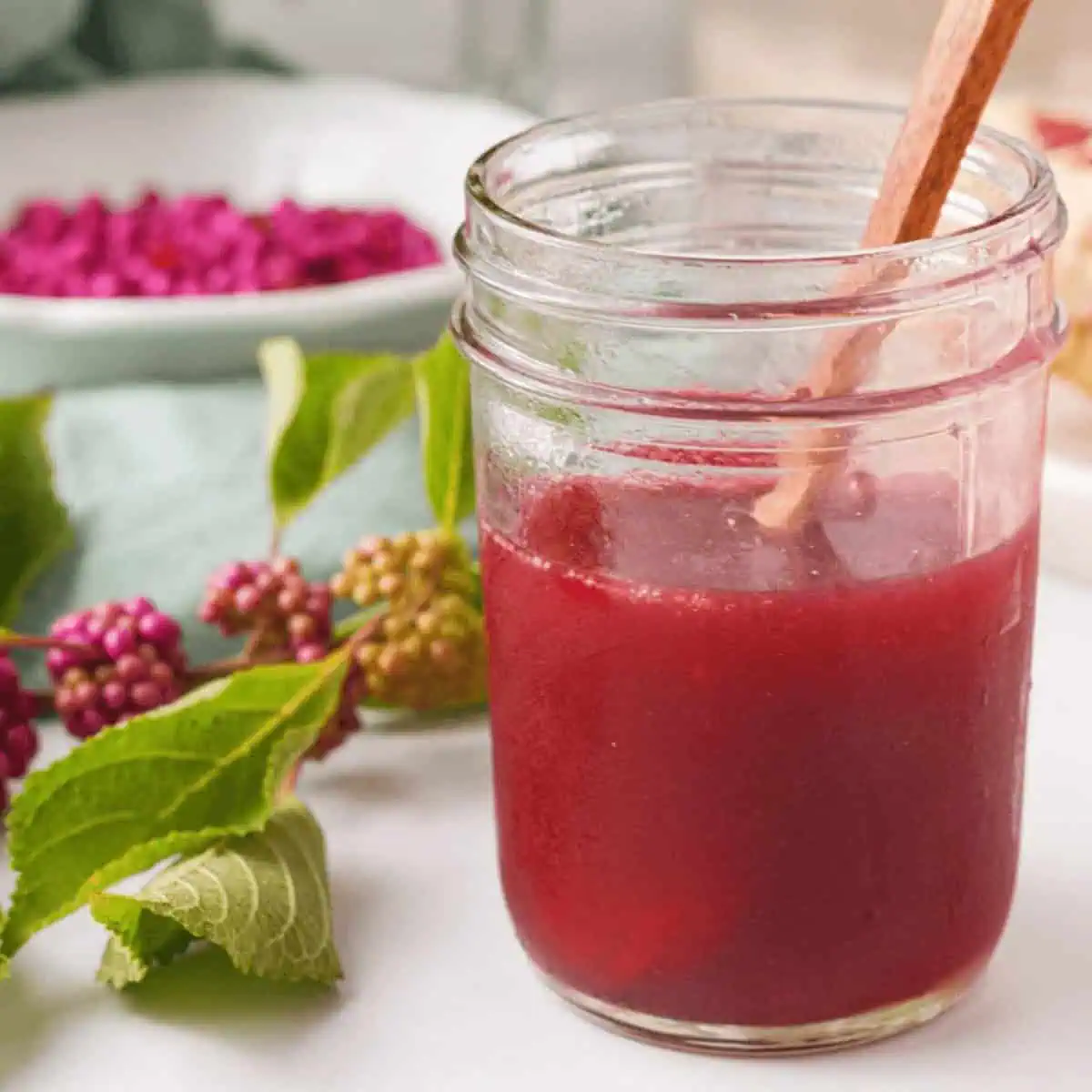
This beautyberry jelly has a texture that's best described as a cross between Jello and jam. It won't crumble away with perfect almost-linear, clean edges when scooped, but it has been strained and is void of fruit pulp, more like a jelly. So, think: spreadable like a jam, but thick like jelly.
🥣 ingredient notes
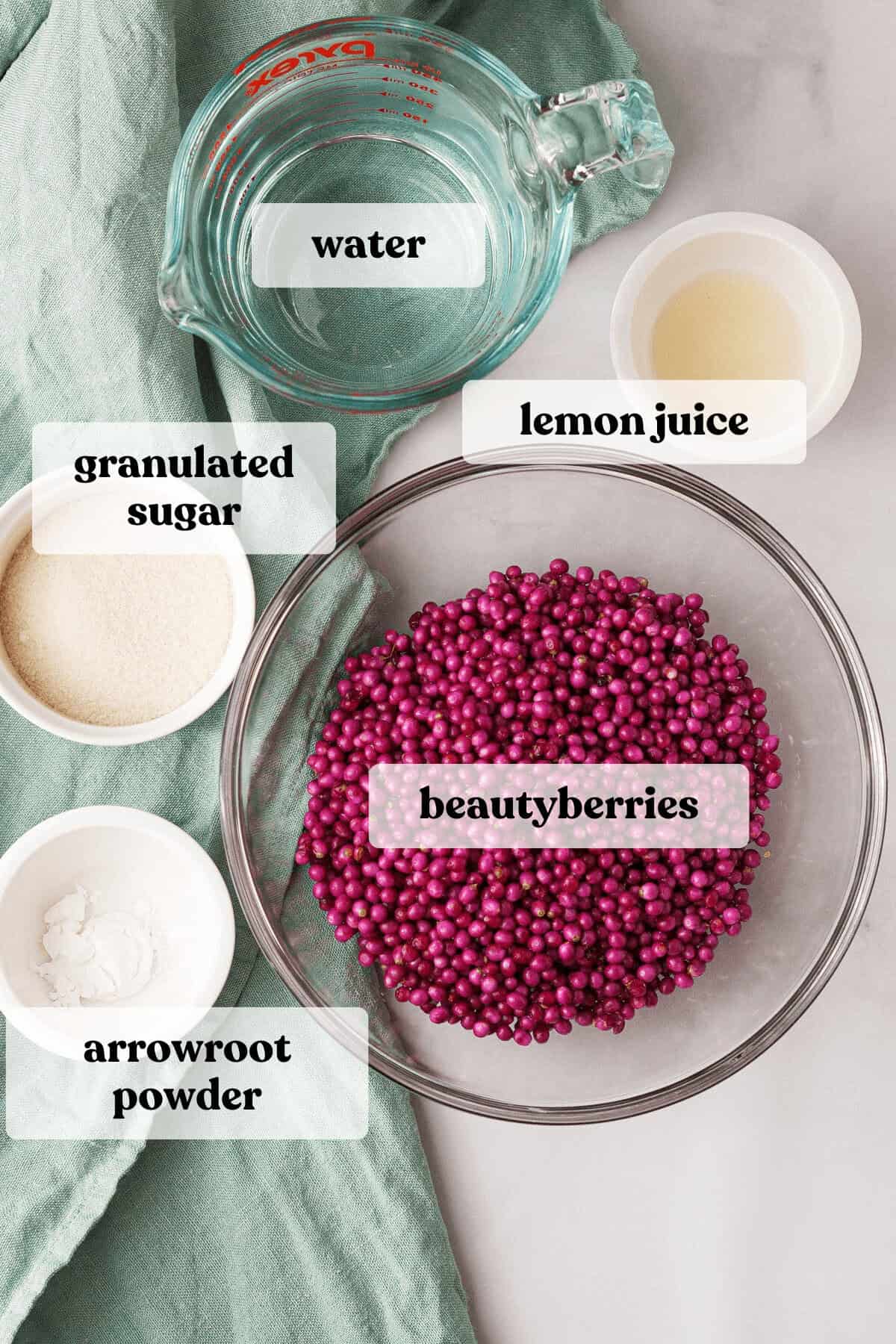
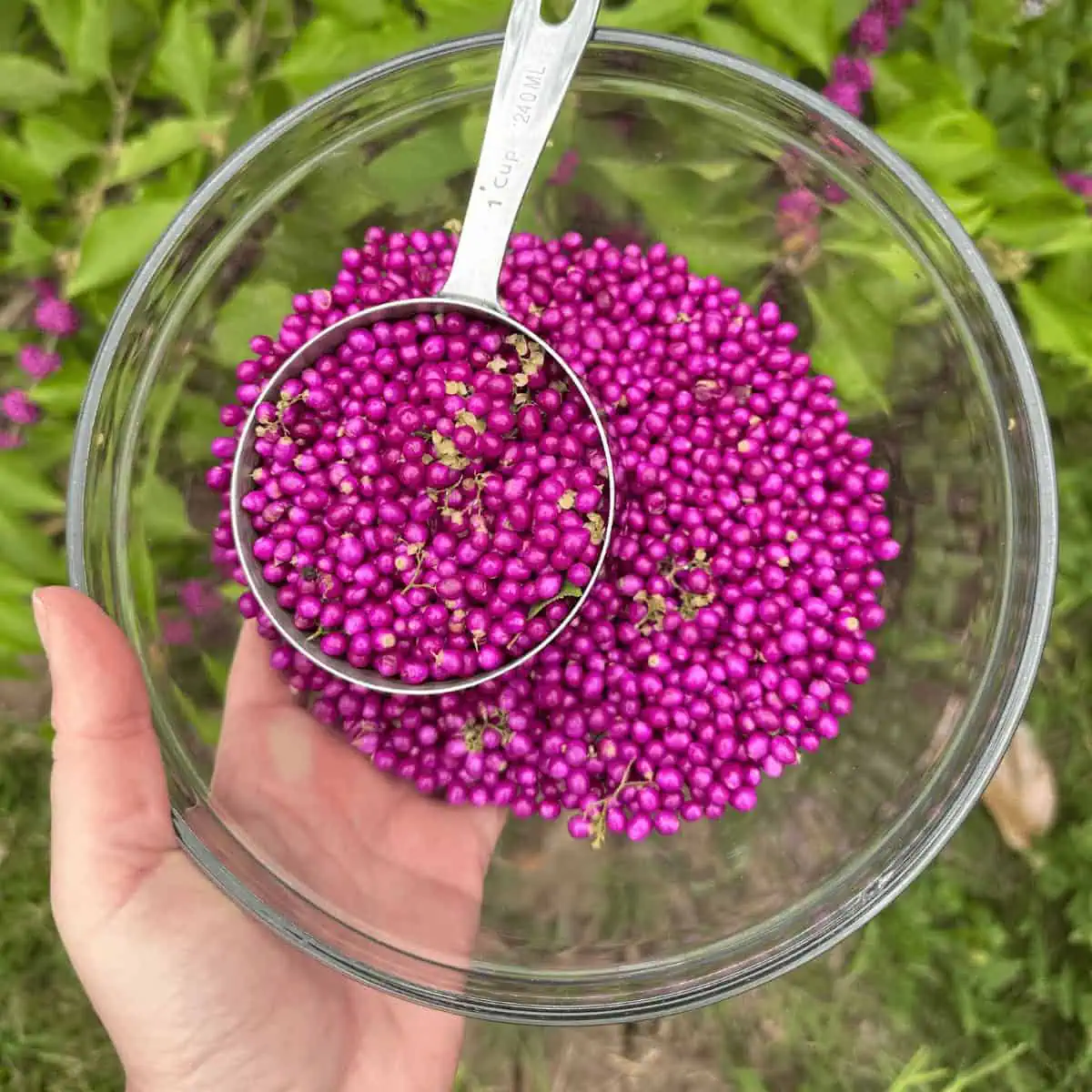
Beautyberries. The individual berries need to be gently removed from the shrub branch and contained in a bowl to prevent them spilling to the ground.
Water. This serves as our liquid. Use water both to simmer the berries and a small amount to create a slurry with the arrowroot powder.
Granulated sugar. Provides depth of flavor and well-rounded sweetness to the beautyberry jelly.
Lemon juice. A small amount enhances beautyberry flavor, but this is optional.
Arrowroot powder. Thickens the jelly without pectin, and gives us a little more control over how much sugar we use to sweeten.
🔪 equipment notes
- Measuring cups and spoons
- Sieve. I use a fine-medium mesh sieve.
- Saucepan. A small-medium pot is fine.
- Spoon or potato masher. I find a potato masher is fastest.
- Citrus juicer. Remember, the plastic-handled citrus juicers are prone to breaking! Here's my preferred wood version.
- Spoon or spatula. For stirring the jelly.
🧑🏽🍳 instruction notes
Before starting, make sure you've washed your berries and removed debris.
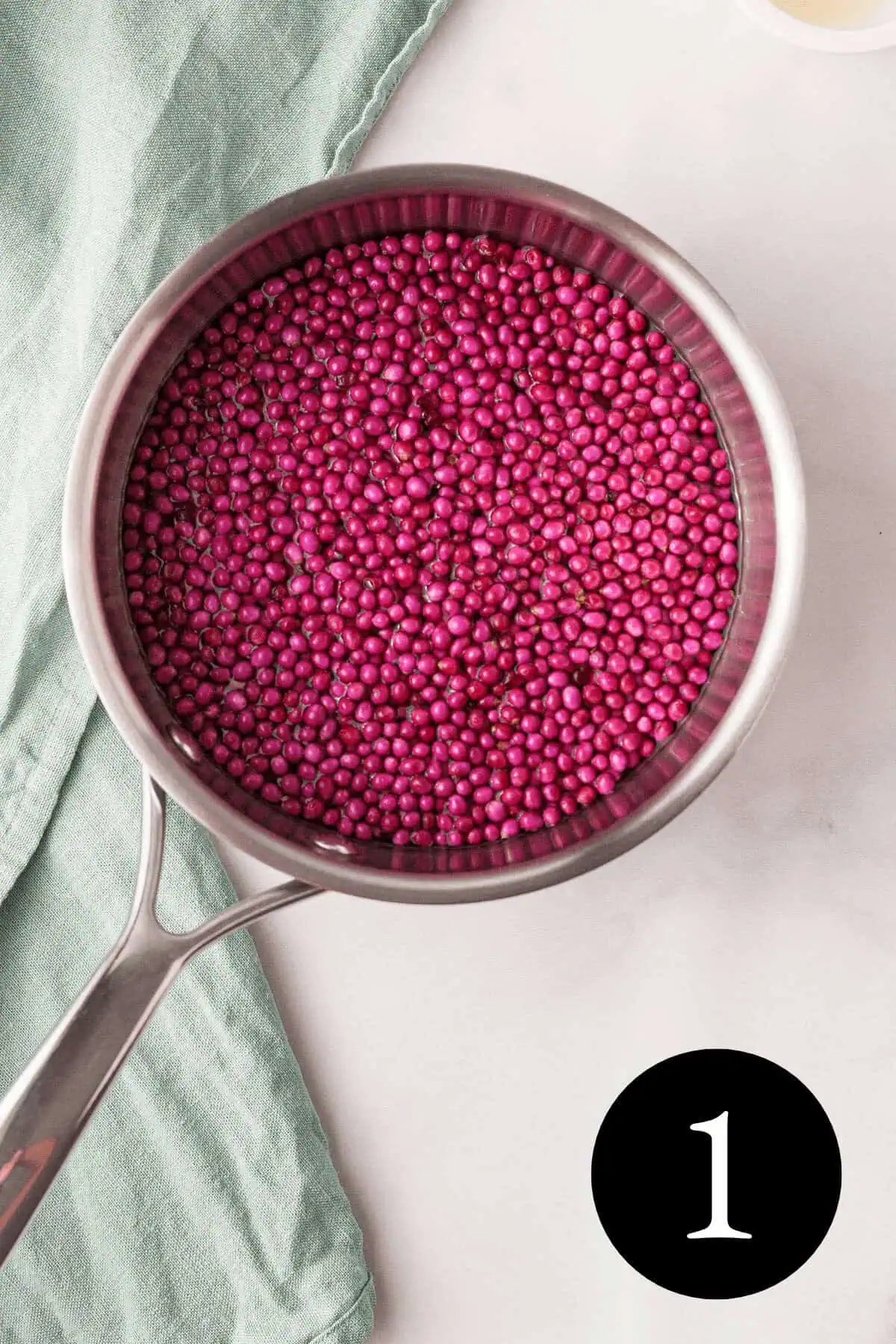
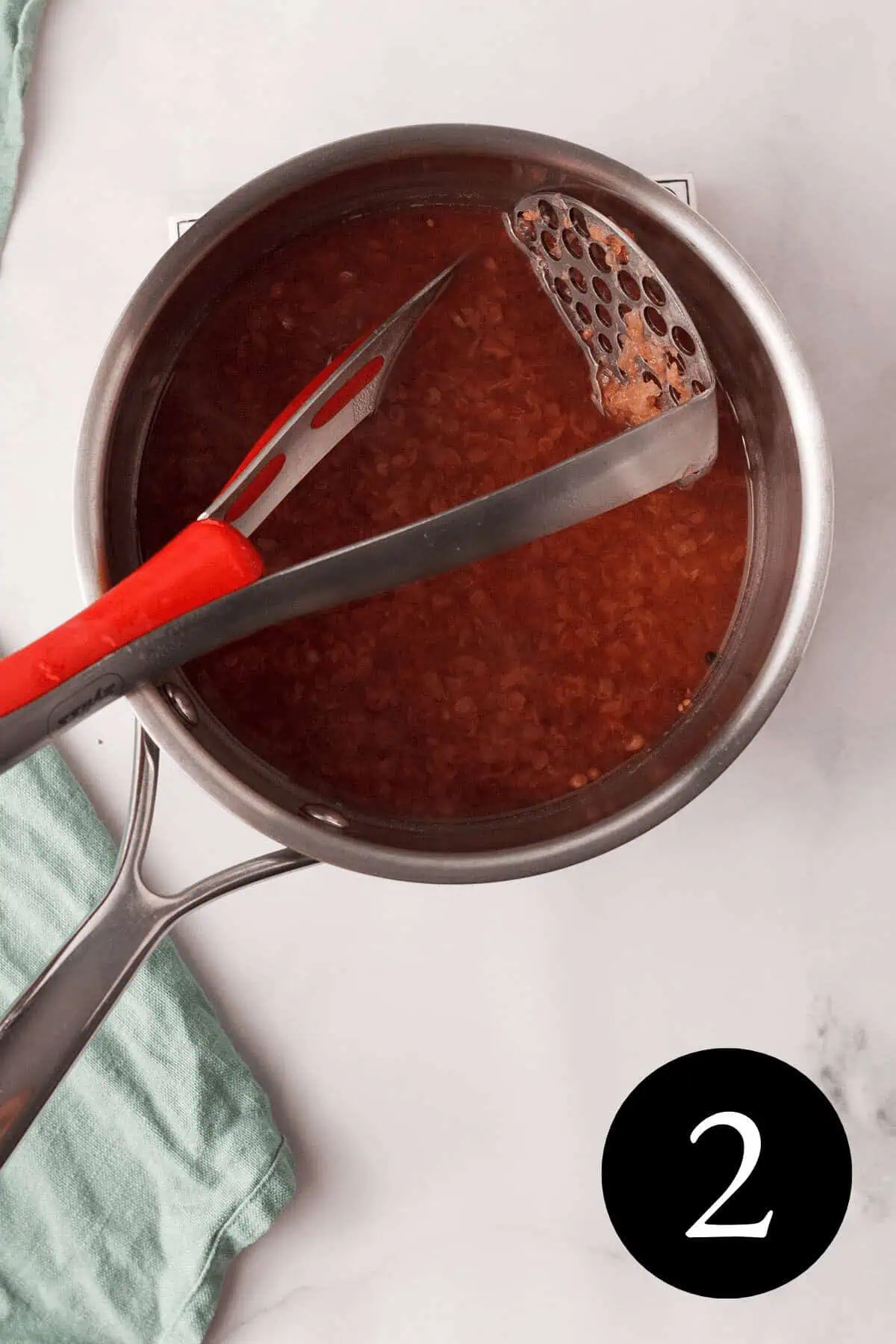
Add beautyberries to a saucepan with water and simmer for 10 minutes. The berries will start to float.
Use a large spoon or potato masher to separate the flesh from the seeds. I mash until all (or almost all of the berries) are crushed.
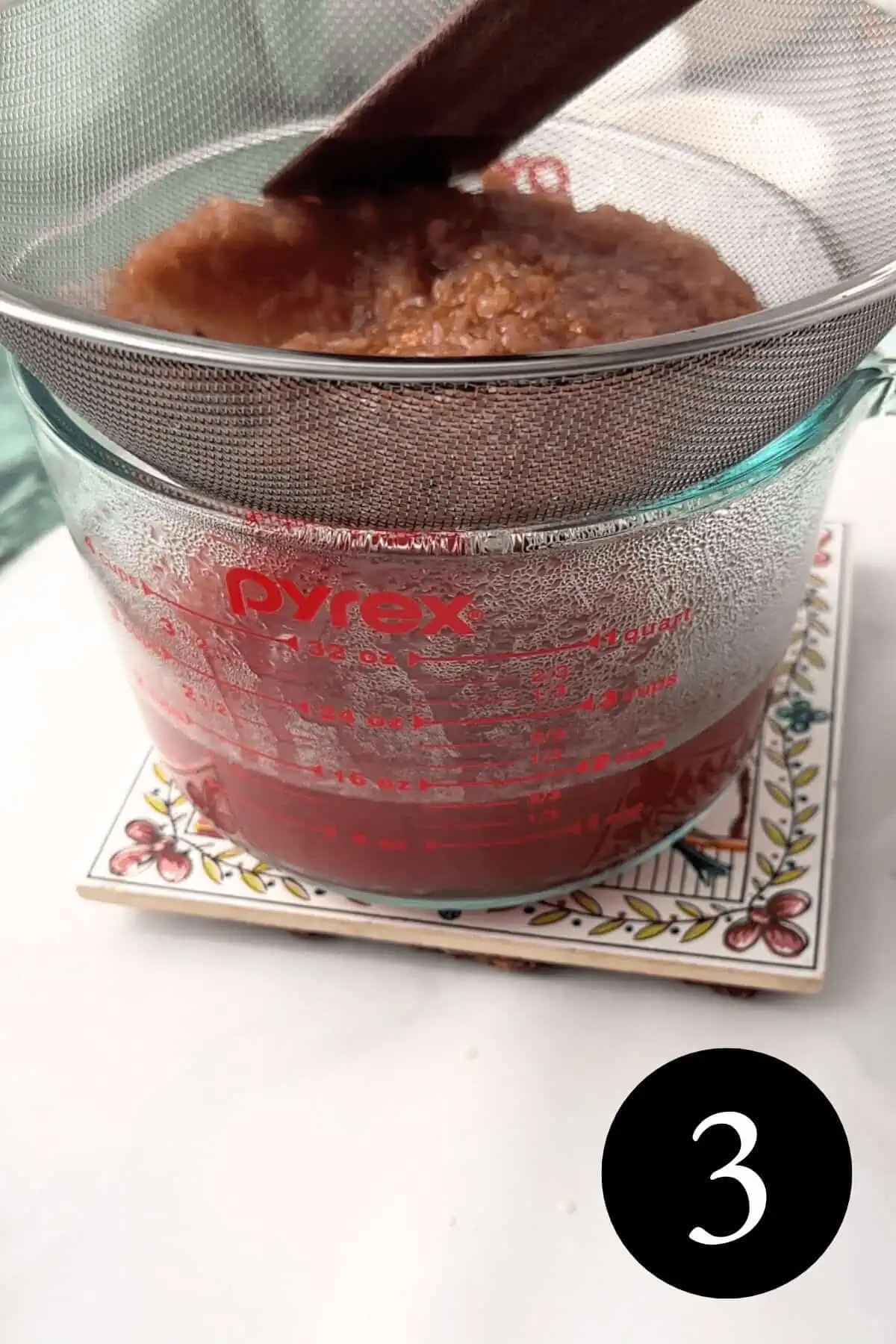
Press through a sieve to remove seeds. The small seeds are hard, so tend to be noticeable if you don't strain them. Be sure to discard in your compost!
Create an arrowroot powder slurry. This requires a small amount of water mixed with the arrowroot powder, stirring until it's incorporated. Set aside.
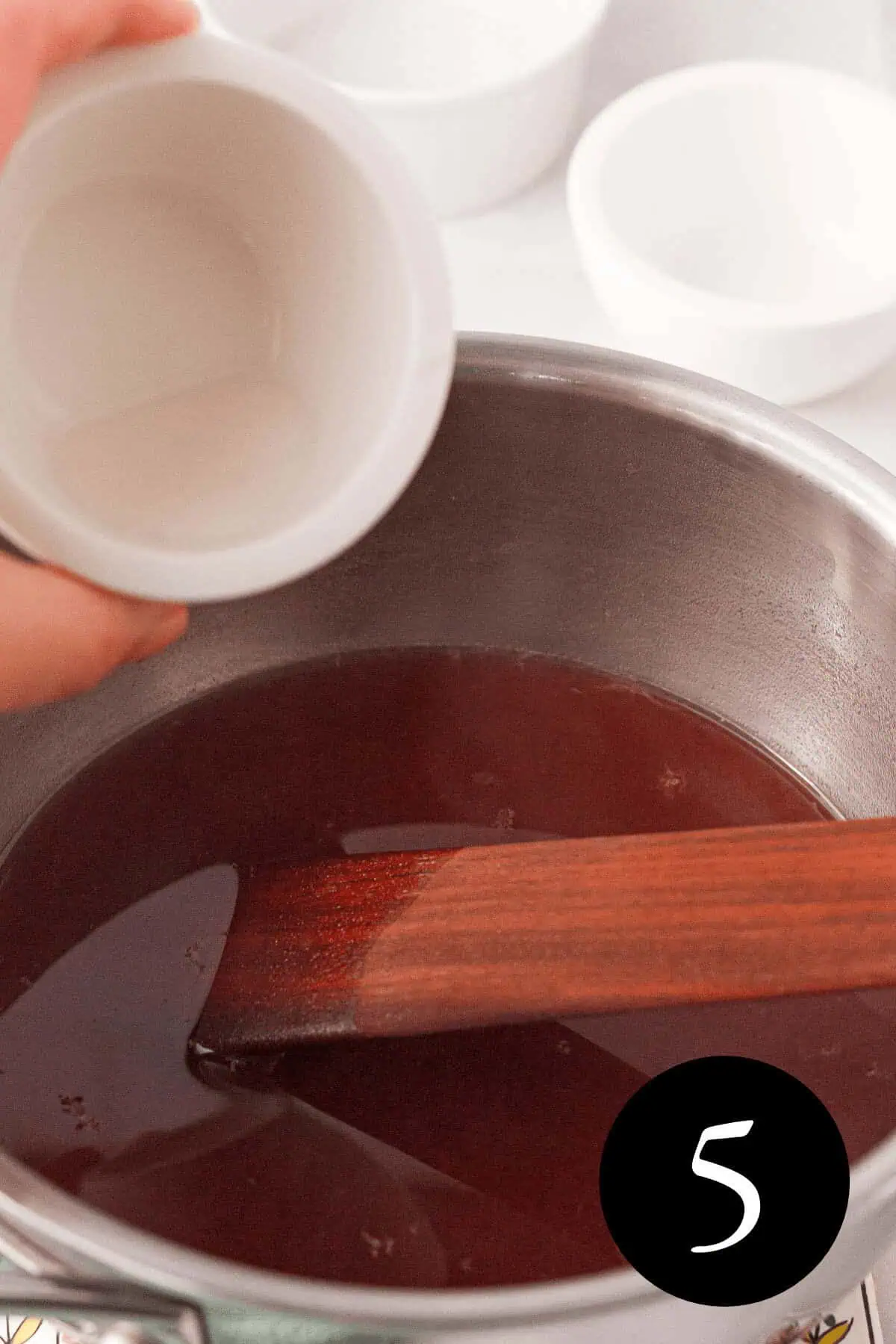
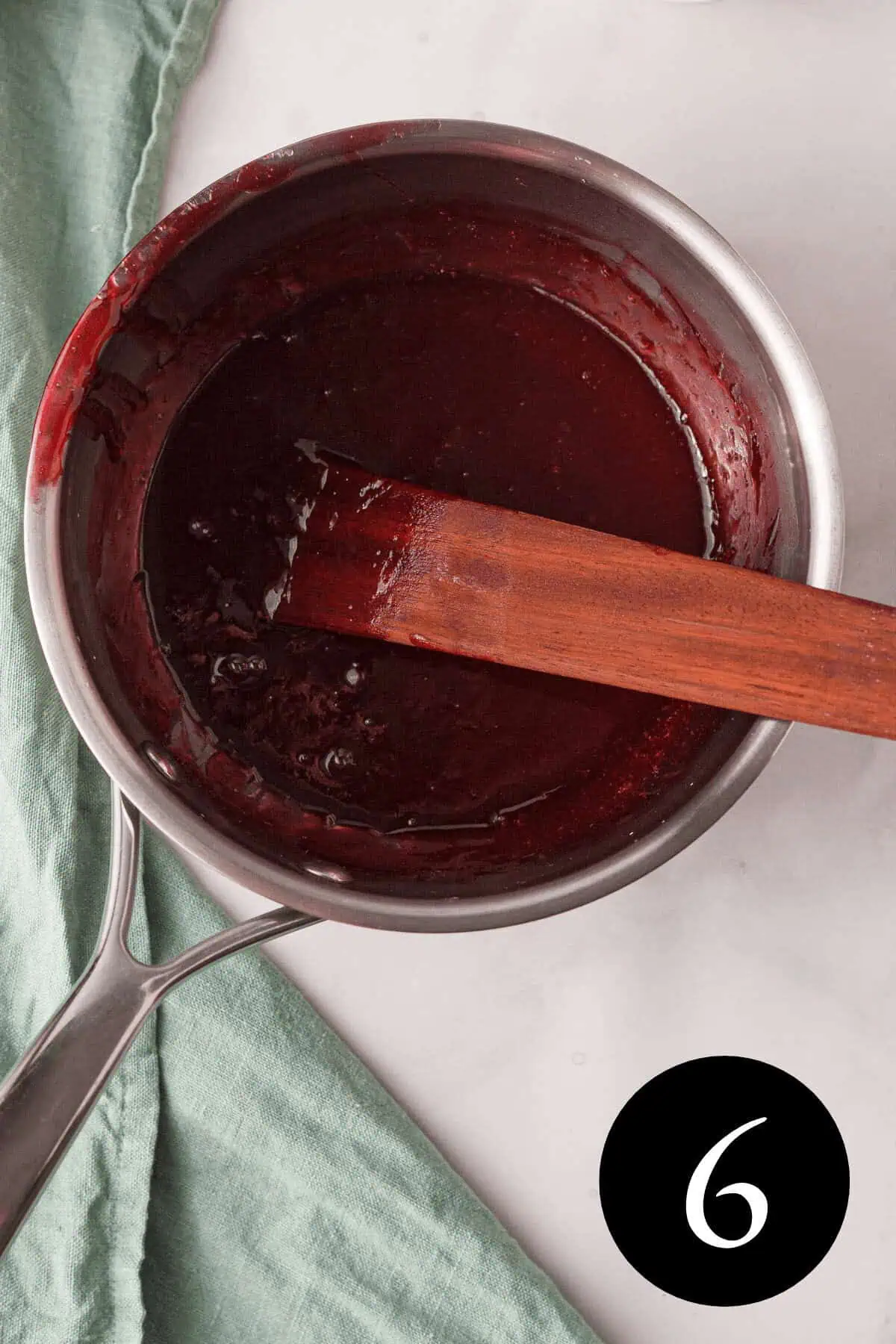
Return liquid to heat and stir in the sugar and lemon juice.
Slowly add the arrowroot powder slurry until you reach your desired consistency. Stir constantly while adding the arrowroot powder. You only need to heat the liquid and allow to briefly simmer until it thickens to the level you enjoy.
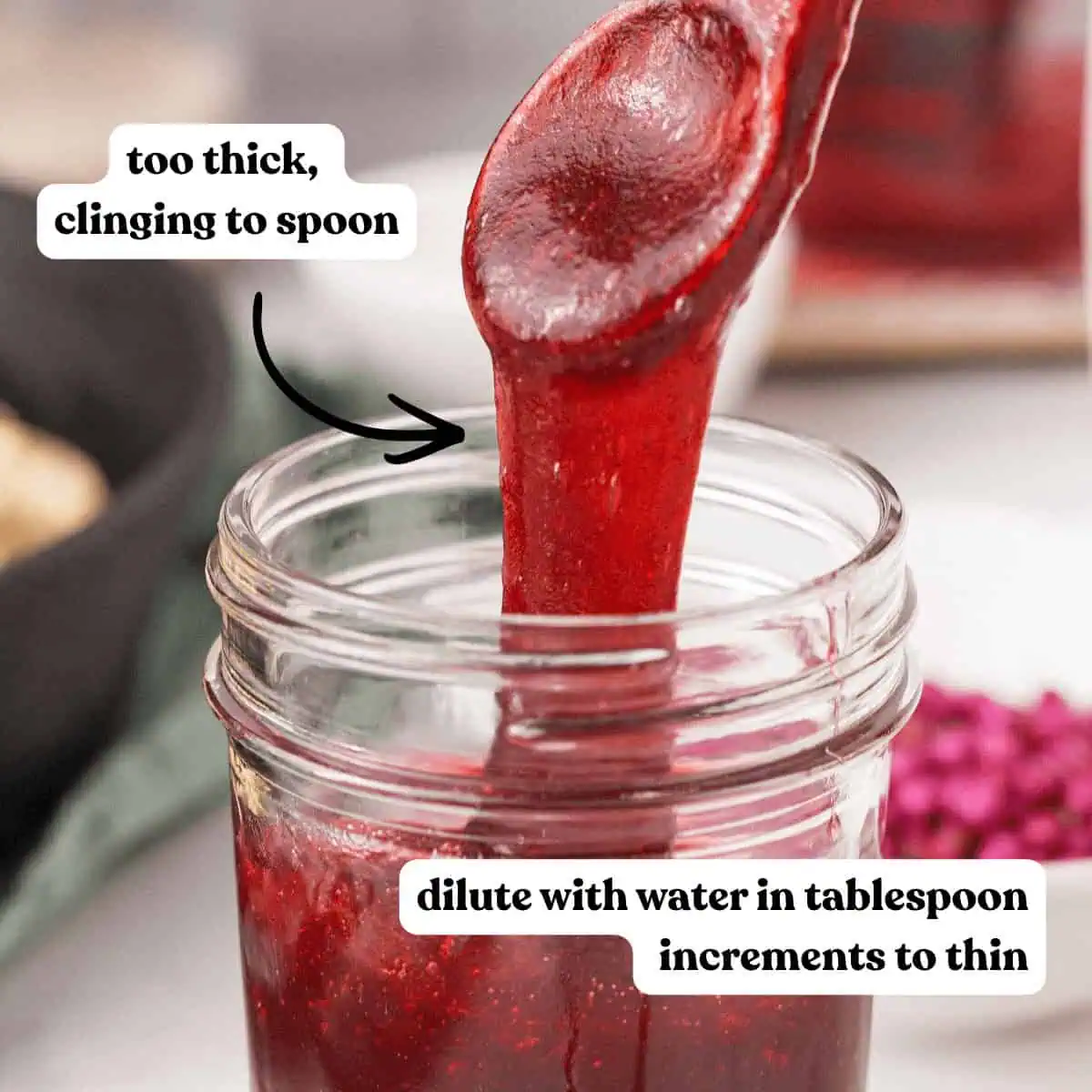
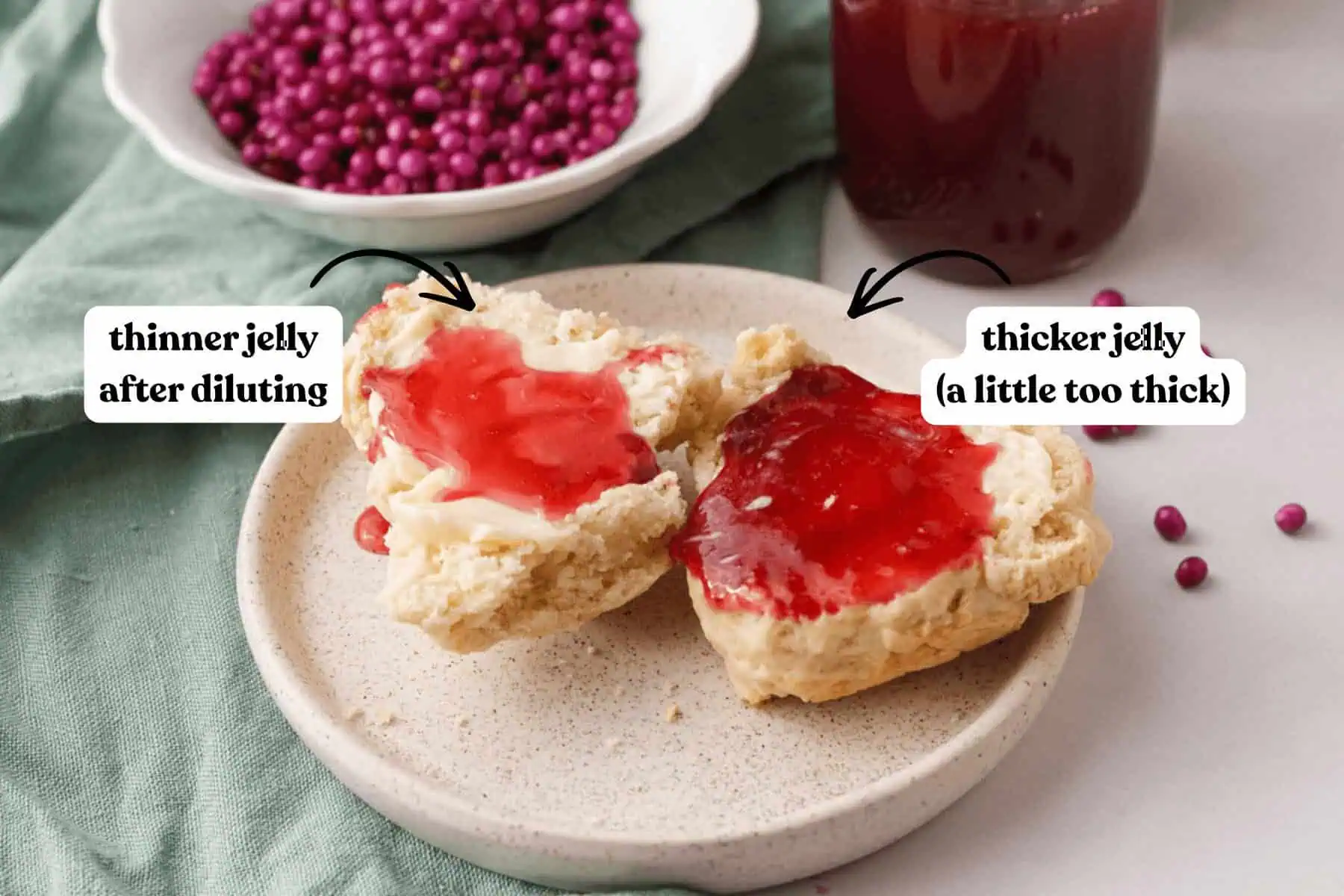
⚠️ Adding too much arrowroot powder will result in a texture that's thick, but stringy. A few reminders when working with arrowroot powder:
- A little goes a long way. The powder will continue to thicken as it cools.
- Create a slurry before adding to hot liquids so it doesn't clump.
- Test thickness by (a) taking a small spoonful and setting the spoon aside to see if it thickens as it cools or (b) removing the pot from heat and allowing to cool for a minute before testing texture.
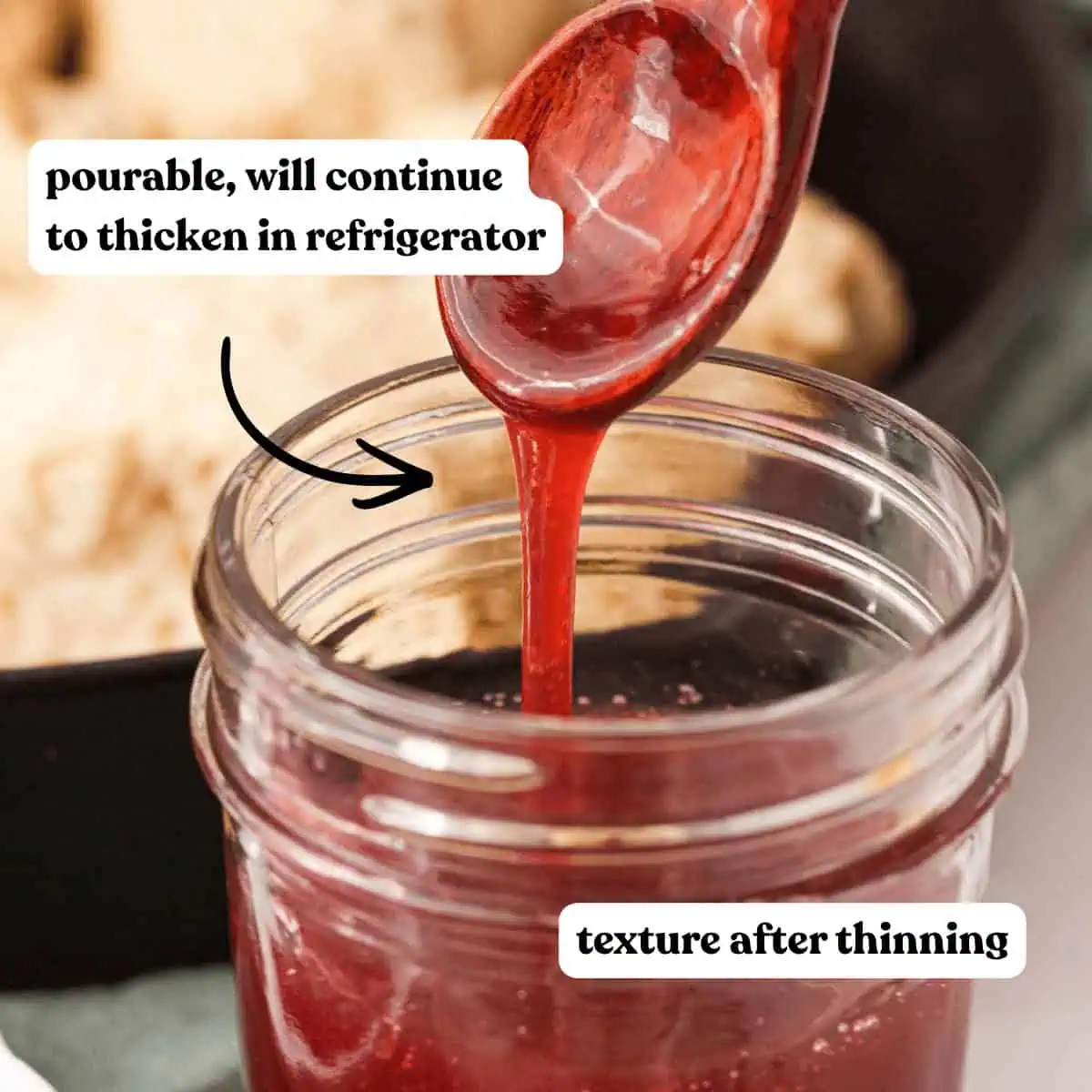
If the jelly thickens too much and becomes stringy, gently heat on low and slowly stir in water a tablespoon at a time until it's thinner and spoonable. Any stringiness should be greatly reduced.
🥫 for those interested in canning beautyberry jelly
Please note this recipe has not been tested for canning because this is a quick, small-batch, "enjoy today!" refrigerator jelly version. If you're interested in canning and preserving beautyberry jelly for future use, please refer to the canning process and ingredients in Cosmopolitan Cornbread's recipe. Just note that you would need to use organic granulated sugar (if in the U.S.) and vegan butter to keep this recipe vegan friendly.
Recipe

American Beautyberry Jelly Recipe
Ingredients
Equipment
Method
- Add the berries and water to a saucepan over low-medium heat, bringing to a simmer for about 20 minutes.2 cups beautyberries, 2 cups water
- Use a large spoon or potato masher to mash the pulp of the berries.
- Using a fine mesh sieve, strain the berries from their pulp. Rinse the saucepan and add the liquid back to the pot.
- Create an arrowroot powder slurry by stirring in a small amount of water until you have an arrowroot liquid.2 teaspoons arrowroot powder
- Stir in the sugar and lemon juice. Slowly add the arrowroot powder slurry, adding about half the mixture to start. Stir frequently to prevent the arrowroot powder from clumping.½ cup granulated sugar, 4 teaspoons lemon juice
- Simmer for about 15 minutes until you reach desired consistency, adding more arrowroot powder if you'd like it thicker. Taste and add more lemon juice or sugar, if desired.
Nutrition
Notes
- Forage beautyberries responsibly and leave enough for wildlife.
- Opt for organic, regenerative sugar when possible.
- Compost leftover beautyberry pulp after straining.
- Repurpose leftover lemon peels, seeds, and zest.
Tried this recipe?
Let us know how it was!🍽️ how to serve
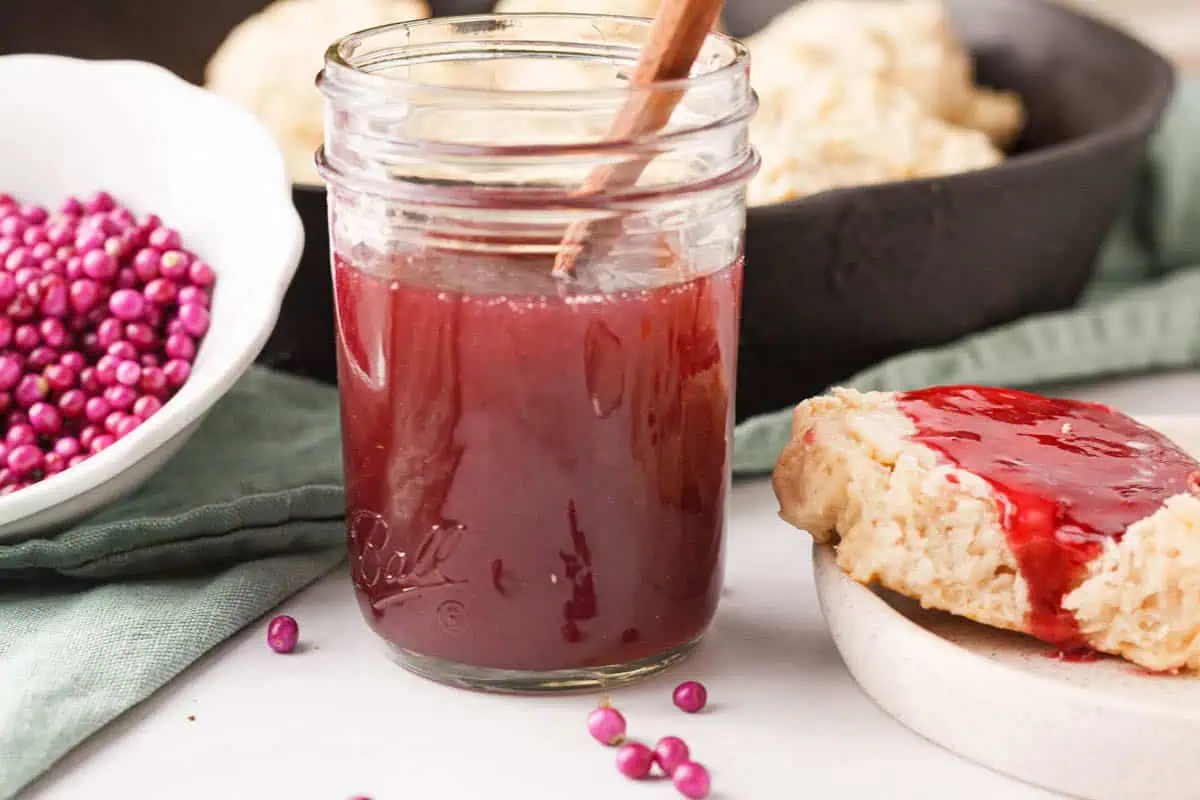
Use the jelly on anything you would normally add a jam or jelly. I love it on some freshly-baked beer biscuits with a little vegan butter. If you're a thumbprint cookie fan, this would be a really pretty (and tasty) filling for early fall!
🧊 storage
Short-term storage. Place in an airtight container in the refrigerator for up to a month.
Long-term storage. I have not tested this jelly in the freezer because I make it in small amounts that we enjoy right away. However, arrowroot powder is known to survive freezing well (as opposed to other thickeners like cornstarch), so you should be able to successfully freeze for up to 3 months. I recommend gently warm on the stovetop before serving.
✅ acceptable substitutions and variations
Texture. You can adjust thickening to create a different texture for the jelly, ranging from a syrup to thick jam.
- Syrup. Add very little thickener to the beautyberry juice and treat it like a syrup pourable over pancakes.
- Jam. Leave some of the pulp in the liquid. Less ideal because some of the smaller seeds are hard.
Thickening agents. I have only tested this jelly with arrowroot powder, but there are other thickening agents that can serve as a replacement. I would add them in small amounts and only treat the jelly as refrigerator jelly (versus canning for shelf-stable storage).
- Pectin. If you have pectin handy, this beautyberry jam recipe might work for you!
- Tapioca powder. Add in small amounts, as you would with arrowroot powder, to reach your desired consistency. Here's more about using tapioca starch when making jelly.
♻️ sustainability profile
sourcing
Beautyberries aren't usually commercially available. If the beautyberry shrub is native to your region, I recommend adding it to your landscape! You might have neighbors who've planted some in their landscape and would be willing to offer you some. Just remember to leave enough for wildlife to enjoy.
Opt for sugar that's organic and grown on regenerative farms, when possible.
waste
Beautyberry pulp. Add the pulp to your home compost system as organic matter.
Lemon zest and seeds. When using fresh lemon juice, I recommend zesting the lemon first (after thoroughly washing) and storing the zest in the freezer. The same is true for the seeds as well, since those can be used as a pectin replacement in some jams.
Leftover lemon peel. I enjoy freezing and using to create a nice simmer pot before composting (in moderation) or giving our disposal a fresh scent (also in moderation).
❓ frequently asked questions
Are American beautyberry berries safe to eat?
Yes, the berries from American beautyberry (scientific name: Callicarpa Americana) are safe to consume. While they can be eaten raw, their taste is bitter. Beautyberry tastes best when cooked into a jelly or jam with sugar and a little lemon juice. Information about the toxicity of white beautyberry bushes is less readily available; therefore, it is advised not to consume white varieties.
Is beautyberry jam good?
Beautyberry jam or jelly is absolutely delicious. The flavor is more subtle than a common berry (like blueberry, strawberry, or blackberry) and has floral notes with a fruity flavor closer to grapes or muscadine. Jam is sweet and beautiful with deep jewel tones that really make it a showstopper on biscuits.
Why is my beautyberry jelly stringy?
If your finished jelly is difficult to spoon or shows signs of stringiness, that means too much arrowroot powder was added to the jelly. It's best to slowly add an arrowroot powder (mixed with water to create a slurry) slowly, only adding more as needed. Once the jelly is slightly thicker than syrup, stop and allow it to finish thickening. This will make it easier to spread on biscuits. For those that already added too much, you can slowly dilute the jelly over warm heat, stirring in a tablespoon of water at a time.
🌱 more ways to bring the garden to the table
From fresh herbs to seasonal berries, these recipes celebrate the ingredients you can grow, harvest, and enjoy from your home garden, to your kitchen table.
- Vegan Basil Pesto with Walnuts
- Blackberry Simple Syrup
- Homemade Blackberry Powder
- Chive Focaccia
- Miso Collard Greens
- Sautéed Radish and Green Pea Pasta
- Balsamic Basil Vinaigrette