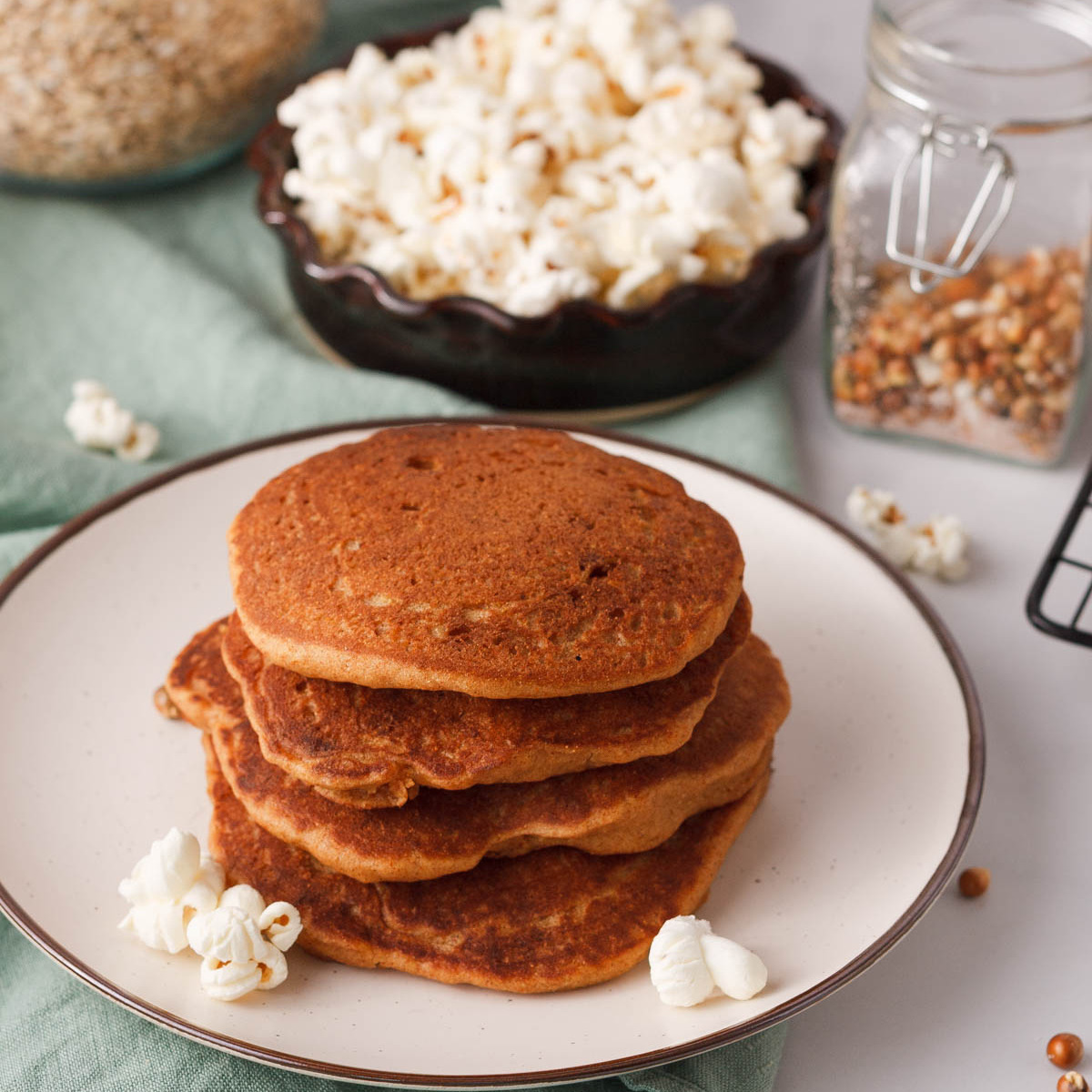

Ingredients
Equipment
Method
- Melt 4 tablespoons coconut oil in a small saucepan until clear. Set aside to cool.4 tablespoons coconut oil
- Mix 1 tablespoon lemon juice into 1 cup soy milk and set aside to curdle.1 tablespoon lemon juice, 1 cup soy milk
- Using a hand mixer, whip 6 tablespoons aquafaba, whipped in a large bowl until stiff peaks form. This should take 2-3 minutes.6 tablespoons aquafaba, whipped
- Whisk together dry ingredients (1 cup unbleached all-purpose flour, 1 cup popcorn flour, 2 teaspoons baking powder, 1 teaspoon baking soda, and ⅛ teaspoon kosher salt).1 cup popcorn flour, 1 cup unbleached all-purpose flour, 2 teaspoons baking powder, 1 teaspoon baking soda, ⅛ teaspoon kosher salt
- In a larger bowl, stir together the wet ingredients (2½ tablespoons sugar, 3 teaspoons pure vanilla extract, plant-based buttermilk, and melted coconut oil).2½ tablespoons sugar, 3 teaspoons pure vanilla extract
- Slowly stir the dry ingredients into the wet. Then, fold in the whipped aquafaba until evenly combined. Be careful not to overmix. If the batter is too thick, add more milk a tablespoon at a time until you reach the desired consistency. Allow to rest 5 minutes to allow the popcorn corn flour to hydrate.¼ cup soy milk
- Coat the skillet with 1 tablespoon extra virgin olive oil. I use a small natural-bristle brush to coat the bottom and repeat between each pancake. Over a medium-low temperature, add a spoonful of batter, gently shaping into a circle. Once bubbles start to appear along the edges and near the center (after 1-2 minutes), use a spatula to flip. Cook for another minute before removing from heat.1 tablespoon extra virgin olive oil
- Repeat the process until all batter has been used. Keep the pancakes on a wire cooling rack until ready to serve. Best enjoyed warm with the toppings of your choice.
Nutrition
Notes
There may be variations with batter hydration based on the popcorn corn flour. Start with 1 cup of milk and add more as needed until the batter is thin enough to shape into a circle without breaking.
Remember to zest your lemon first and reserve seeds for other uses to help keep this low waste.